
AI-Native Video Studios Are Coming: What Creators and Brands Should Learn Now
Video creation is entering a new phase.
For years, creators and brands thought about video production in a familiar way. You needed a camera, a script, a crew, a location, editing software, lighting, sound, and a lot of time. That model still matters, but a new production style is emerging beside it.
Welcome to the age of AI-native video studios.
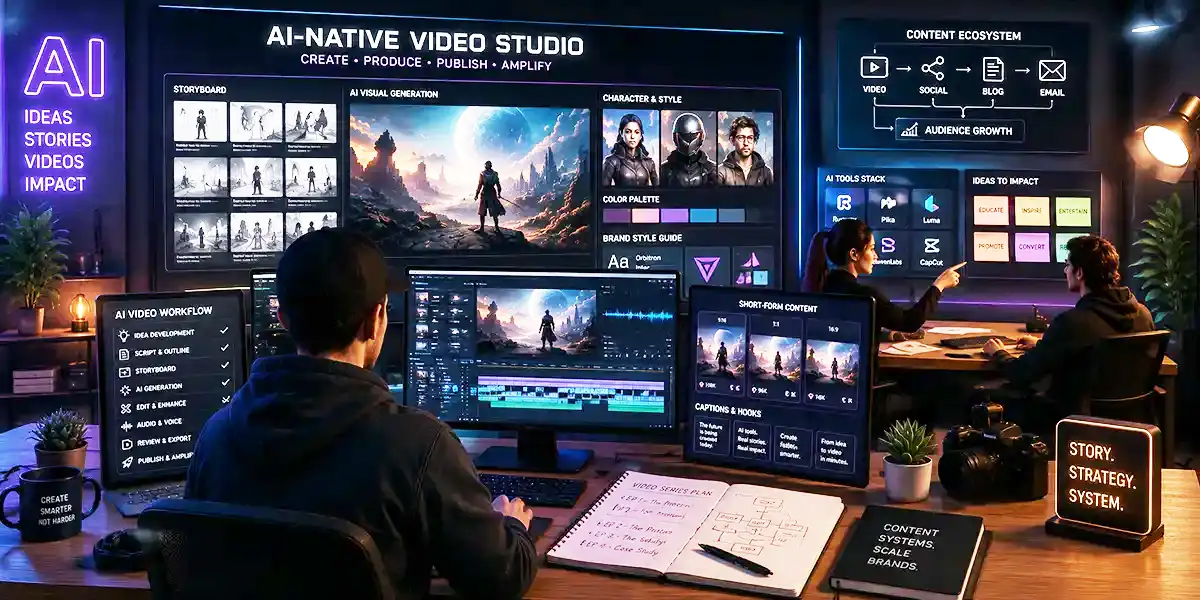
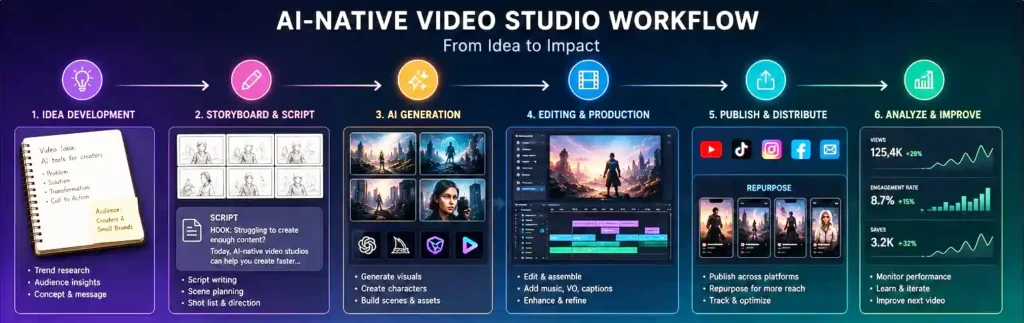
This does not simply mean using AI to generate random clips. It means building an entire creative workflow around AI-assisted production: ideas, scripts, storyboards, visual styles, characters, edits, captions, short-form clips, and repurposed content.
For creators, brands, marketers, and small businesses, this shift matters because AI video is no longer just a novelty. It is becoming a practical production system.
Why AI-Native Video Studios Are Getting Attention Now
The conversation around AI video has changed quickly. According to The Verge, Netflix is building an internal AI-driven animation studio called INKubator focused on short-form animated content using generative AI. The report says the unit is connected to job listings and roles around producers, software engineers, and CG artists.
At the same time, AI filmmaking startup Flick has raised $6 million in seed funding to build an AI-native filmmaking platform. Business Insider reports that Flick is focused on helping creators make short films using storyboard-based workflows, character consistency, scene editing, and AI models from multiple providers.
And in the creator world, AI filmmaking collective Gossip Goblin has gained attention for its fast-moving sci-fi shorts. The Guardian reports that the collective has generated hundreds of millions of views while using AI tools to create surreal, dystopian, and highly stylized short films.
These examples point to a larger trend: AI video is moving from single-output tools into repeatable creative systems.
What Is an AI-Native Video Studio?
An AI-native video studio is a video production workflow designed around AI from the beginning.
Instead of treating AI as a small add-on at the end of the process, the studio uses AI across the full creative pipeline. That can include research, ideation, script development, visual references, storyboards, scene generation, editing, captions, thumbnail concepts, social cutdowns, and distribution planning.
The word “studio” is important. A studio is not just a tool. A studio is a system.
That is the lesson creators and brands should take seriously. The opportunity is not only to make one AI video. The opportunity is to build a repeatable AI-assisted production workflow that can support content marketing, education, product promotion, storytelling, and social media growth.
Why This Matters for Creators and Small Brands
Big studios may use AI for animation, film production, and entertainment formats. But smaller creators and brands can use the same mindset in a more practical way.
A small business does not need to make a cinematic sci-fi short. A creator does not need to build a full animated series. But they can use AI-native workflows to produce better video content more consistently.
For example, one article can become:
- A YouTube video outline
- Three short-form video scripts
- A product demo
- A social media carousel
- A newsletter section
- A lead magnet promotion
- An affiliate product tutorial
- A branded explainer video
That is the real power of the AI-native studio mindset. It helps you stop thinking about content as isolated pieces and start thinking about content as a system.
The Shift from Random AI Clips to Repeatable Production
Many creators start with AI video by typing a prompt, generating a clip, and hoping it looks good. That can be fun, but it is not a reliable content strategy.
A stronger approach is to create repeatable production assets:
- Brand voice guidelines
- Visual style references
- Prompt templates
- Short-form script frameworks
- Storyboarding templates
- Thumbnail direction
- Caption formats
- Repurposing workflows
- Publishing checklists
This is where creators and small brands can compete. You may not have a large production budget, but you can build a small, focused content system that helps you move faster and stay consistent.
What Creators Should Learn from AI-Native Studios
1. Build a style system before creating videos
The more consistent your brand looks and sounds, the easier it is to produce useful video content. Before generating clips, define your visual style, tone, color palette, message, and audience.
This does not need to be complicated. A simple one-page style guide can help you avoid random-looking content.
2. Treat prompts like production assets
Good prompts should not be thrown away after one use. Save your best prompts for hooks, scripts, scene ideas, thumbnail concepts, captions, and content repurposing.
Over time, this becomes your creative library.
3. Create repeatable video formats
Instead of inventing a new structure every time, create repeatable formats. For example:
- Problem → mistake → better solution
- Tool demo → result → recommendation
- Question → answer → next step
- Myth → truth → example
- Before → process → after
Repeatable formats make video creation faster and more recognizable.
4. Repurpose every strong idea
An AI-native content workflow should not stop after one video. Every strong idea should become several useful assets.
A blog article can become a YouTube script, three short videos, an email, a product CTA, and a social post. A product demo can become a tutorial, a short clip, a FAQ answer, and a sales page section.
This is how creators get more value from each idea.
Where AI Video Fits into Digital Marketing
AI video can support several parts of a digital marketing system.
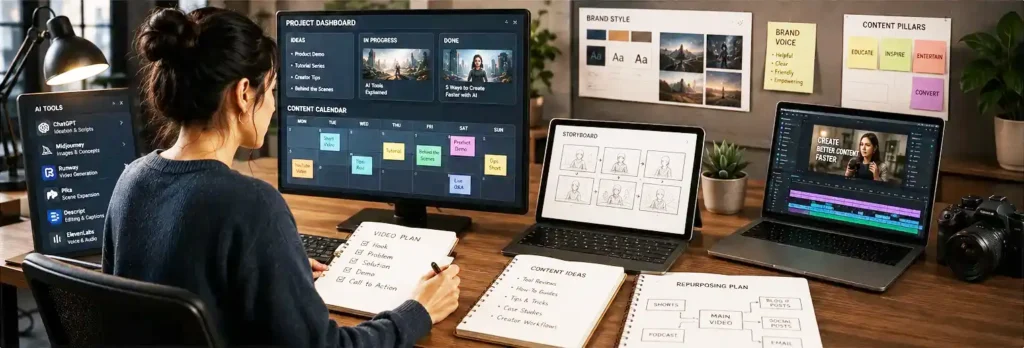
It can help with awareness by creating short-form videos that introduce ideas. It can help with education by turning complex topics into simple explainers. It can help with trust by showing product demos, walkthroughs, and behind-the-scenes content. It can help with conversion by supporting landing pages, email campaigns, and product offers.
For Sights.com, this connects directly to the product ladder:
- The AI Visibility Starter Kit helps people improve clarity and trust.
- The AI Video Marketing Kit helps creators turn ideas into video content.
- The AI Social Media Growth Kit helps turn those videos and ideas into ongoing social content.
- The AI Visibility Pro Kit helps build a stronger long-term visibility system.
That is the key idea. AI video should not sit alone. It should connect to your larger content, visibility, email, product, and social media strategy.
Useful Tools for an AI-Native Video Workflow
You do not need every tool available. You need a simple stack that helps you move from idea to finished content.
For visual exploration, thumbnails, mockups, and image-based concepts, OpenArt.ai can help creators generate visual directions before building videos or marketing assets.
For creators who want to turn video content into lessons, workshops, or digital education products, LearnWorlds can be useful for building and selling structured online learning experiences.
For creators managing accounts, tools, affiliate dashboards, and client platforms while traveling or using shared networks, NordVPN can add an extra layer of privacy and safer browsing.
The Human Role Still Matters
AI-native video studios do not remove the need for human creativity. In many ways, they make human judgment more important.
Someone still needs to decide what story matters, what message is useful, what feels honest, what fits the brand, and what should be published.
AI can generate options. Humans decide what deserves attention.
This is especially important for brands. Audiences can sense generic content quickly. The brands that win with AI video will not be the ones that automate everything. They will be the ones that use AI to support clearer, faster, more consistent human-led storytelling.
Final Thoughts
AI-native video studios are coming, but the lesson for creators and brands is not simply “make more AI videos.”
The real lesson is to build a smarter production system.
Use AI to help with ideas, structure, scripting, visuals, editing, repurposing, and publishing. But keep your brand voice, human judgment, and creative direction at the center.
The future of video marketing is not just faster production. It is better creative systems.
Want the Complete AI Video Marketing System?
The AI Video Marketing Kit for Creators gives you prompts, scripts, planners, affiliate video templates, course promo workflows, and repurposing tools to turn your ideas into useful video content faster.
Affiliate Disclosure: Some links in this article are affiliate links. If you purchase through them, Sights.com may earn a commission at no additional cost to you. We only recommend tools and resources that fit the topic and may be useful for creators, marketers, and small businesses.