
Google’s New Multimodal AI Could Reshape Content Creation for Brands
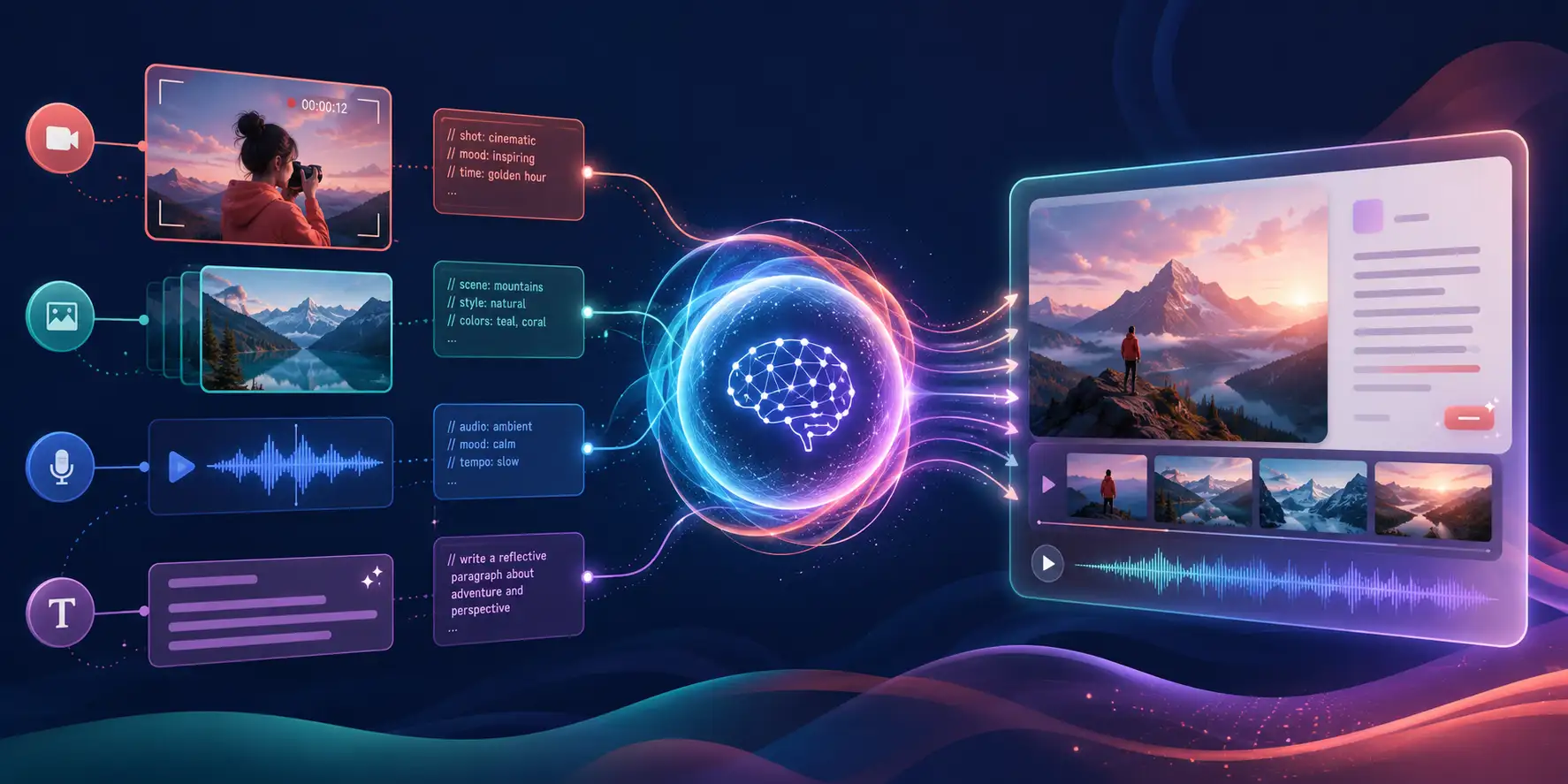
AI content creation is moving into a new phase, and this time the shift feels much bigger than another chatbot update or a slightly better image tool. Google has introduced Gemini Omni, a new family of multimodal AI models designed to create media from different kinds of input, including text, photos, video, and audio. The first model, Omni Flash, is already being rolled out into the Gemini app, Google Flow, and even YouTube Shorts tools, making this one of the most important recent developments in multimodal AI content creation. Google described Gemini Omni as the ability to “create anything from any input”, and its broader I/O announcements confirm that Omni Flash is already reaching creator-facing products. Google I/O 2026 announcements.
For creators, marketers, brand teams, and agencies, this matters because it suggests that multimodal generation is no longer a future concept. It is becoming part of normal production workflows. When a platform allows users to combine an image, a voice sample, a text prompt, and an existing clip to generate something new, the entire content pipeline starts to change. Ideation gets faster. Repurposing becomes easier. Testing creative variations becomes cheaper. And platform-native content becomes easier to produce at scale.
Why multimodal AI content creation matters right now
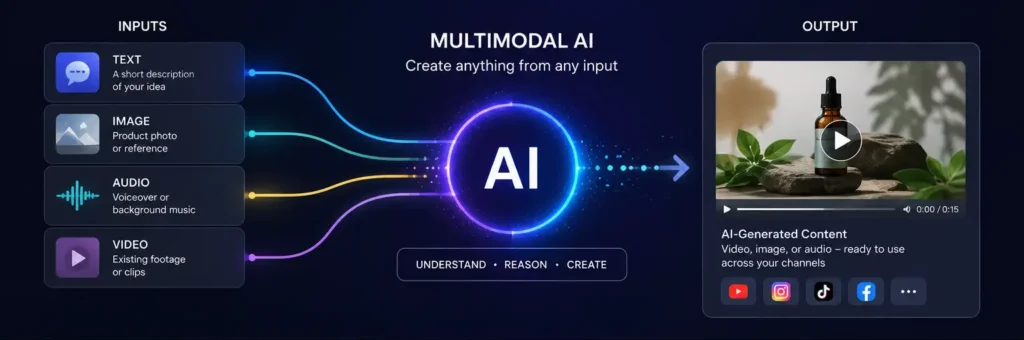
There have been AI image tools, AI writing tools, and AI video tools for a while now. What makes this latest shift more important is convergence. Instead of treating each input type separately, the new model is designed to work across media. That means a creator could potentially start with a product photo, add a short brand description, include a background audio cue, and generate a short-form visual concept far more quickly than with a traditional workflow.
According to Google’s announcement, Gemini Omni brings Gemini’s reasoning together with media generation so users can edit naturally through conversation. Google also says Omni Flash is being rolled out now in the Gemini app and Google Flow, and is available in YouTube Shorts Remix and YouTube Create for adult users. Google Gemini Omni announcement. Google I/O 2026 roundup.
This is important because distribution and creation are starting to connect more tightly. Historically, creators would generate content in one tool, edit it in another, then publish it on a platform that did not deeply understand the creation process. Now the platform itself is becoming the creative layer. That could reshape how brands make short-form video, test concepts, personalize campaigns, and adapt content for different audiences.
What Google’s latest tools actually signal for multimodal AI content creation
The real story is not simply that Google launched another AI model. The story is that Google is embedding multimodal generation into places where people already create and publish content. Reports covering the I/O launch noted that Gemini Omni Flash can generate video from text, photos, video, and audio, and that it is launching across Google’s consumer-facing ecosystem, including Shorts tools. Coverage also highlighted that creators will be able to remix existing content in new ways using these AI features. The Verge on Gemini Omni Flash. The Verge on YouTube Shorts Remix.
That means brands should stop thinking of AI as a side experiment and start thinking about it as infrastructure. The teams that adapt fastest will likely be the ones that build creative systems around idea generation, rapid asset transformation, short-form adaptation, and ongoing testing.
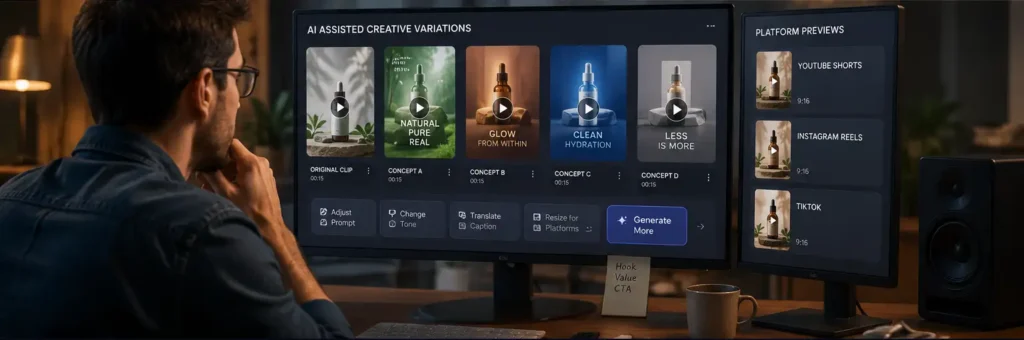
For example, a brand could turn a static campaign image into several short video directions for different social platforms. A creator could generate a visual variation from an existing clip rather than filming from scratch. A marketing team could test multiple intros, tones, or visual styles for a paid campaign without rebuilding everything manually. The speed advantage alone makes this important, but the bigger advantage is the ability to iterate more often.
How multimodal AI content creation could change brand workflows
In practical terms, most businesses will not replace their full creative team with AI. That is not the likely outcome. What is more realistic is that brands will use multimodal AI content creation to speed up early and middle stages of production. This includes brainstorming, concept visualization, fast prototyping, repurposing existing media, and creating platform-specific variants.
Here is where that becomes especially powerful:
- Campaign ideation: Teams can move from rough concept to mockup faster.
- Asset transformation: Existing product shots, stills, and clips can become new creative variations.
- Short-form video production: Brands can create more content for Shorts, Reels, and TikTok-style formats.
- Creative testing: Different hooks, intros, visuals, and tones can be tested without full reshoots.
- Localized content: Messaging and media can be adapted for different audiences more efficiently.
That does not mean quality will automatically improve. It means output volume and speed will increase. The advantage will go to brands that know how to guide the machine well, edit ruthlessly, and stay consistent with their visual identity.
Why human direction still matters in multimodal AI content creation
The excitement around AI often creates the false impression that tools replace taste. They do not. The more accessible content generation becomes, the more valuable good judgment becomes. If every brand gains the ability to produce more content quickly, then differentiation shifts toward strategy, storytelling, editorial discipline, and brand identity.
A tool like Gemini Omni can reduce friction, but it cannot decide what your brand should stand for. It cannot define your tone with real conviction. It cannot determine whether a campaign actually feels premium, trustworthy, playful, or emotionally compelling in a way that connects with your audience. That still takes people.
In other words, AI may speed up production, but humans still shape meaning. The best results will come from combining machine efficiency with human creative leadership.
What creators and marketers should do next
If you run a brand, agency, creator business, or media operation, now is the time to rethink your production system. Not because everything needs to be automated, but because the tools are changing what is possible at the idea and execution stage.
A smart response would include four steps. First, audit your current workflow to see where content production slows down. Second, identify existing assets that could be repurposed through AI-assisted tools. Third, build a repeatable prompt and testing process for short-form content. Fourth, create clear brand guardrails so faster output does not lead to weaker creative.
That last part is critical. As AI makes content easier to produce, weak brands may flood channels with generic material. Strong brands will use these tools to get sharper, faster, and more consistent. The tool does not create the strategy. It amplifies the system already behind it.
The bigger picture for multimodal AI content creation
Google’s latest rollout points to a much bigger industry trend. AI is moving beyond one-off assistants and into the core layer of creative software and publishing platforms. That means content creation will become more conversational, more adaptive, and more integrated across media formats.
For Sights.com readers, the key takeaway is simple: the future of content is not just AI-generated, it is multimodal. The businesses that learn to move fluidly between text, image, audio, and video will have a major advantage. And the ones that connect that ability to branding, storytelling, and audience strategy will be the ones that win attention.
Google’s Gemini Omni launch does not mean traditional creative work disappears. It means the creative workflow is being compressed, accelerated, and reshaped. That opens the door for more experimentation, more personalization, and faster media production. But it also raises the bar for strategic thinking and creative direction.
The tools are getting smarter. The question now is whether brands are ready to use them well.
For more on where AI is heading next, explore our related coverage on AI tools, branding, and digital marketing strategy here on Sights.com.