
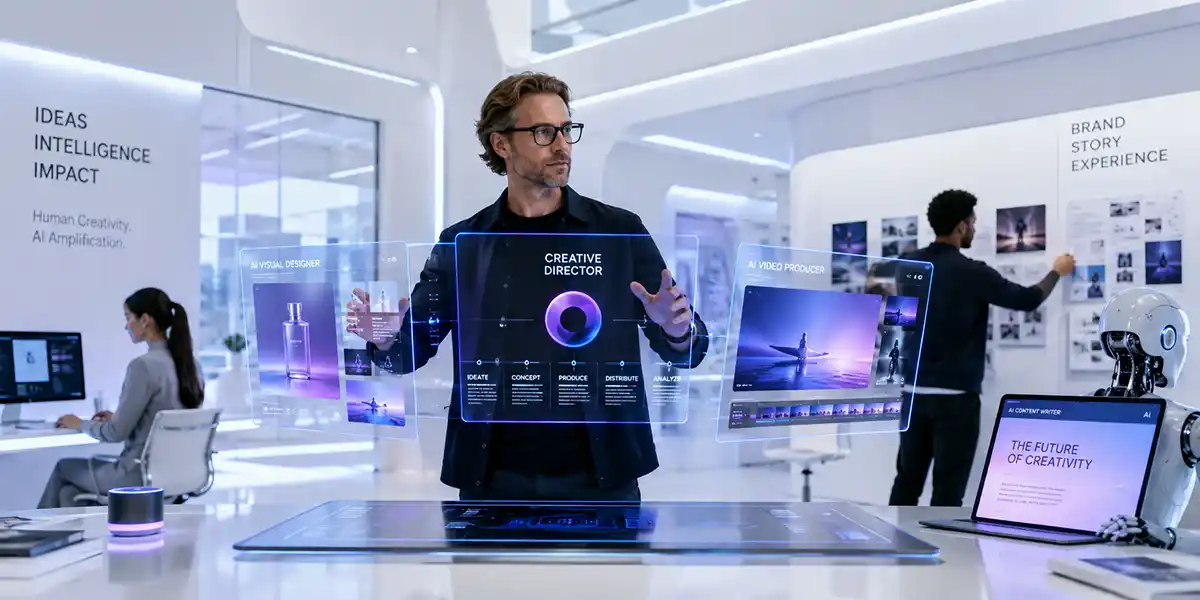
Why Creative Professionals are Turning Into AI Creative Directors
Artificial intelligence is changing creative work faster than any technology since the arrival of the internet. What began as simple AI tools capable of generating text or images has rapidly evolved into intelligent systems that can produce videos, design marketing campaigns, write code, edit content, and automate complex creative workflows.
For many creative professionals, this transformation has raised an important question:
Will AI replace creative jobs?
The better question may be:
How will AI redefine what it means to be creative?
Rather than eliminating creativity, AI is changing where creative professionals deliver the greatest value. Production tasks are becoming increasingly automated, while strategy, storytelling, leadership, and creative direction are becoming more valuable than ever.
The future belongs not to those who create every asset themselves, but to those who can guide intelligent systems to bring great ideas to life.
The First Wave of Creative AI
When generative AI first entered the creative industry, most attention focused on individual tools.
AI could write articles.
Generate images.
Create presentations.
Produce music.
Generate videos.
Build websites.
For many people, these tools appeared to automate individual creative tasks.
Designers worried about image generation.
Writers questioned AI-generated articles.
Video editors saw AI creating clips in minutes.
This first wave created understandable concerns about automation and job displacement.
However, it also demonstrated something equally important—AI was exceptionally good at accelerating production.
The Second Wave Is About Workflows
Today, AI is evolving beyond individual creative tasks.
Instead of simply generating a single image or writing a paragraph of text, modern AI platforms are beginning to manage entire creative workflows.
A marketing campaign can now include:
- AI-assisted research
- Campaign planning
- Copywriting
- Graphic design
- Video generation
- Social media variations
- Audience personalization
- Performance analysis
Much of the repetitive production work can now happen in minutes rather than days.
This changes the role of the creative professional.
Instead of producing every individual asset, creatives increasingly guide the overall direction of the work.
From Creator to Creative Director
One of the biggest shifts happening across agencies, marketing teams, and creative businesses is the move from creator to creative director.
Traditionally, creative professionals spent much of their time producing assets manually.
Designers created layouts.
Copywriters drafted multiple versions of campaigns.
Editors assembled videos frame by frame.
Today, AI can assist with many of these production tasks.
The human role becomes one of leadership.
Creative professionals increasingly define:
- The strategy
- The creative vision
- The customer experience
- The brand voice
- The emotional message
- The final quality standard
AI becomes the production engine.
Humans become the creative directors.
Why Human Creativity Becomes More Valuable
As AI-generated content becomes more common, originality becomes increasingly valuable.
AI is excellent at recognising patterns, generating variations, and accelerating production.
What it cannot easily replicate is genuine human perspective.
The most valuable creative skills are becoming:
- Original thinking
- Storytelling
- Creative judgement
- Taste
- Brand leadership
- Emotional intelligence
- Cultural understanding
These qualities shape ideas before AI begins producing content.
The stronger the creative direction, the stronger the AI output becomes.
AI Doesn’t Replace Creativity—It Amplifies It
History shows that new creative technologies rarely eliminate creativity.
Desktop publishing changed graphic design.
Digital photography changed photography.
Video editing software changed film production.
The internet transformed publishing.
Each technological shift automated parts of the creative process while creating entirely new opportunities.
Artificial intelligence follows the same pattern.
Instead of replacing creativity, it allows creative professionals to spend less time on repetitive production and more time solving meaningful problems.
This shift enables smaller teams to produce higher-quality work, faster than ever before.
The Skills That Will Define the Next Generation of Creatives
As AI becomes integrated into every creative discipline, technical production skills alone will no longer be enough.
Future creative professionals will increasingly need to develop:
Strategic Thinking
Understanding customer needs, market positioning, and business objectives.
Creative Direction
Providing vision that guides AI-generated work toward meaningful outcomes.
Storytelling
Building narratives that create emotional connections with audiences.
Brand Leadership
Maintaining consistency, authenticity, and long-term brand value.
Human-AI Collaboration
Knowing how to combine human creativity with AI efficiency to produce exceptional results.
These skills cannot be automated because they depend on judgement, experience, and imagination.
The Future Creative Professional
The future creative professional will likely spend less time producing content and more time directing intelligent systems.
Rather than creating one design, they may oversee hundreds of AI-generated variations.
Instead of writing every marketing campaign, they will shape the strategic message.
Rather than editing every frame of a video, they will focus on storytelling and audience engagement.
This represents a shift from production to leadership.
From execution to strategy.
From making content to creating vision.
Conclusion
Artificial intelligence is not removing creativity from the workplace.
It is redefining where creativity creates the greatest value.
As production becomes increasingly automated, the importance of human imagination, strategy, storytelling, and creative leadership continues to grow.
The professionals who thrive in the future will not be those competing against AI.
They will be the ones who learn to direct it.
Because in the age of intelligent systems, the greatest competitive advantage isn’t creating more content.
It’s creating better ideas.
Continue Exploring the Future Digital Economy
Discover more insights on artificial intelligence, future work, creative technology, digital ownership, blockchain, creator businesses, and the innovations reshaping how we work, create, and build value in the Future Digital Economy.
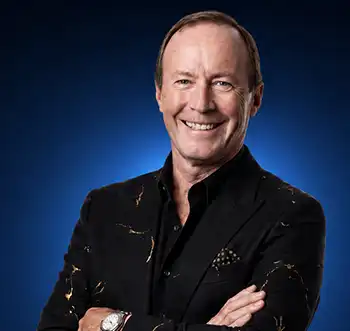
About the Author
Curtis Randall is an award-winning creative executive and future systems thinker helping people and businesses understand the future of work, technology, digital ownership, and creativity. Through CurtisRandall.com, and Sights.com, Curtis explores the systems shaping how people work, create, own, and build value in a rapidly changing world.
Connect with Curtis: LinkedIn · YouTube · Instagram · X · TikTok · Facebook · Threads
Want the Complete AI Video Marketing System?
The AI Video Marketing Kit for Creators gives you prompts, scripts, planners, affiliate video templates, course promo workflows, and repurposing tools to turn your ideas into useful video content faster.