
AI Video Ads Are Moving From Simple Clips to Full Campaign Systems
AI video tools are entering a new stage. For the last few years, most of the excitement has focused on generating short clips from text prompts, images, or basic creative ideas. That was impressive, but it was only the beginning.
Now the bigger shift is happening around campaigns.
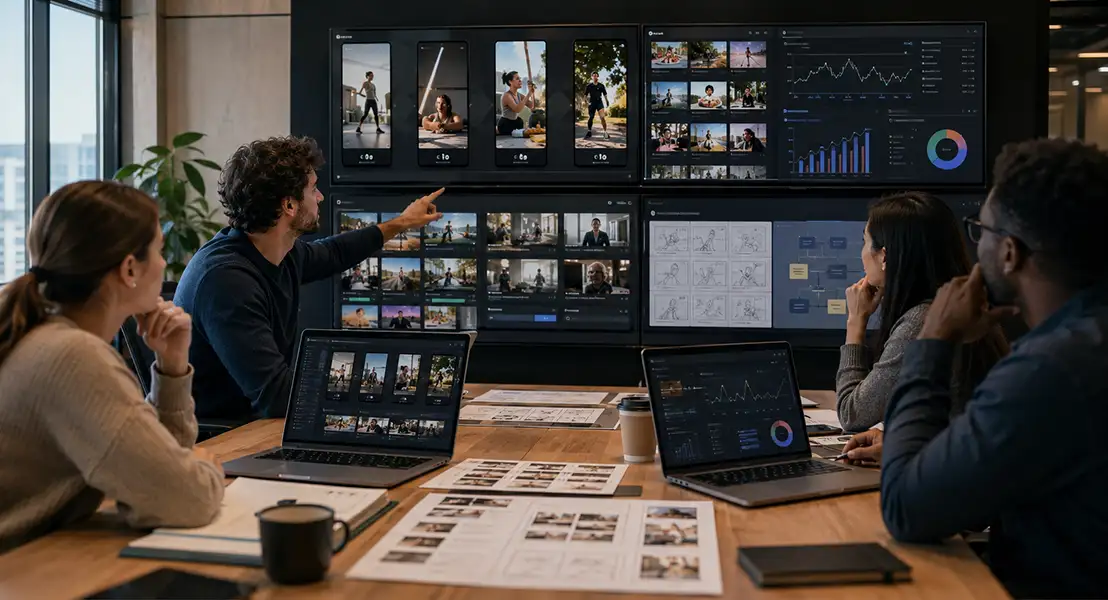
Brands and marketers do not just need one interesting AI-generated video. They need a full system that can help create multiple versions, adapt content for different platforms, test creative angles, support performance goals, and keep the message consistent across ads, social media, landing pages, and product content.
In other words, AI video is moving from “make me a clip” to “help me build a campaign.”
That shift matters for creators, small businesses, marketing teams, and agencies because video is one of the most powerful content formats online. But it is also one of the hardest to produce consistently. AI is beginning to change that.
Why This Topic Is Timely
Several recent developments show where AI video marketing is heading. MNTN recently announced QuickFrame AI 3.0, describing it as a move toward production-ready short-form and TV creative rather than simple generated clips. You can read the announcement here: MNTN Releases QuickFrame AI 3.0.
Another recent example is MOTHER.tech’s launch of Degen, described as a one-tap AI creative engine that turns taste into publish-ready content. You can view the release here: MOTHER.tech Launches Degen.
At the same time, AI advertising platforms are increasingly focused on campaign performance, targeting, creative testing, and optimization. StackAdapt’s overview of AI in advertising explains how AI is being used for campaign optimization, content generation, targeting, and measurement. You can read more here: AI in Advertising: How It’s Transforming Marketing in 2026.
The trend is clear: AI video is not only about creating visuals. It is becoming part of the full marketing workflow.
The Old Way: One Video at a Time
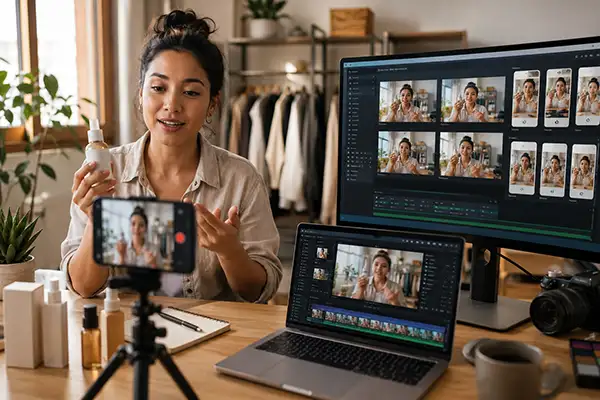
Traditional video marketing is often slow and expensive. A brand may start with a concept, write a script, schedule a shoot, hire talent, capture footage, edit the video, create different aspect ratios, add captions, export multiple versions, and then test them across platforms.
That process still has value, especially for high-end campaigns and brand storytelling. But for everyday digital marketing, it can be difficult to keep up.
Modern brands need content for YouTube, TikTok, Instagram Reels, Facebook, LinkedIn, Pinterest, websites, paid ads, product pages, email campaigns, and more. Each platform has different expectations, lengths, formats, and audience behaviors.
Creating one video at a time is no longer enough.
A single campaign may need:
- A short-form video ad
- A vertical social video
- A square feed version
- A YouTube Shorts version
- A product demo clip
- A founder-style talking-head clip
- A customer problem/solution video
- A retargeting ad
- A landing page hero video
- Multiple hooks and calls to action
This is where AI video tools become more valuable. The real power is not just generating one asset. It is helping marketers create a connected set of assets around one idea.
The New Way: Campaign Systems
An AI video campaign system helps turn one message into many usable pieces of content.
For example, a small business might start with one product offer. With the right AI workflow, that offer can become a short-form video ad, a product explainer, a social media teaser, a comparison video, a problem/solution clip, a YouTube Short, and a landing page video concept.
That is a major shift.
Instead of treating video as a one-off production task, brands can treat video as part of a larger content ecosystem.
A good AI video campaign system may help with:
- Campaign idea generation
- Script writing
- Hook testing
- Visual direction
- Scene planning
- Voiceover drafts
- Caption writing
- Format adaptation
- Platform-specific versions
- Creative testing
- Performance review
This turns AI from a novelty tool into a practical production assistant.
Why AI Video Ads Matter for Small Businesses
For small businesses, video has always been powerful but difficult. Many business owners know they should create more video, but they often lack the time, budget, confidence, or creative direction to do it consistently.
AI can reduce some of that pressure.
A small business can use AI to brainstorm video ideas, write scripts, plan scenes, create captions, generate visual prompts, and repurpose one article or product page into several video concepts.
This does not mean every business needs to create fully AI-generated videos. In fact, some of the strongest results may come from combining real human video with AI-assisted planning.
For example, a business owner could record a simple phone video answering a customer question. AI can then help turn that raw idea into:
- A tighter script
- A stronger opening hook
- A caption for Instagram
- A LinkedIn post
- A YouTube Shorts description
- A blog intro
- A follow-up email
- A paid ad variation
That is much more realistic for small businesses than trying to produce expensive polished videos every week.
Creative Testing Is Becoming Easier
One of the biggest advantages of AI video advertising is creative testing.
In the past, testing multiple video ads could be expensive. If a brand wanted to test different hooks, visuals, offers, lengths, and calls to action, it needed extra production time and editing resources.
AI makes it easier to create variations.

A brand can test different openings, such as:
- Problem-first hook
- Question-based hook
- Bold prediction
- Before-and-after story
- Customer pain point
- Direct offer
- Educational tip
This matters because the first few seconds of a video often determine whether someone keeps watching. AI can help marketers explore more creative angles before deciding what to publish or test.
However, more variations do not automatically mean better marketing. Human judgment still matters. Someone still needs to decide which message feels right, which version matches the brand, and which creative direction is worth testing.
The Risk: More AI Slop
There is also a downside. As AI video tools become easier to use, the internet may become flooded with generic video ads.
We are already seeing concerns about low-quality AI-generated content across social platforms, search, and video. If brands use AI only to create more content faster, without strategy or taste, they may end up producing forgettable ads that look similar to everyone else’s.
This is the same problem facing AI-generated blog posts, AI images, and AI social media captions. The tool can help, but it cannot replace the need for a clear message.
For AI video ads to work, brands still need:
- A real audience insight
- A clear offer
- A strong hook
- Human editing
- Brand consistency
- Visual taste
- Trustworthy claims
- A useful call to action
AI can help produce the video, but the brand still needs to know what it wants to say.
Human-Led AI Video Will Win
The strongest future for AI video marketing is not fully automated content with no human direction. It is human-led AI production.
That means people set the strategy, define the message, shape the story, and approve the final creative. AI helps with speed, options, repurposing, editing, scripting, and versioning.
This is especially important for brands that want to build trust.
Audiences can often tell when content feels empty. They may not know which AI tool was used, but they can sense when a video lacks personality, originality, or real understanding.
Human-led AI video keeps the creative direction grounded.
It allows brands to use AI without losing their voice.
How Brands Should Start Using AI Video Ads
The best way to start is not by trying to automate everything. Start with one campaign idea.
Choose one product, service, article, offer, or customer question. Then use AI to create multiple video angles around that idea.
A simple workflow could look like this:
- Choose one topic or offer.
- Write the main message in one sentence.
- Create five video hooks.
- Choose the best three hooks.
- Write three short scripts.
- Create one vertical video version for social.
- Create one square version for feeds.
- Create one shorter ad variation.
- Publish and track performance.
- Use the results to improve the next version.
This approach is manageable, even for small teams.
It also helps avoid the mistake of producing random content. Every video should connect back to a goal: awareness, trust, traffic, leads, sales, or audience growth.
What This Means for Content Creators
For creators, AI video tools can make it easier to turn ideas into consistent content.
A creator can take one blog post, podcast topic, newsletter idea, or trend and turn it into several short videos. AI can help write the hooks, summarize the points, suggest visuals, create captions, and adapt the message for different platforms.
This is especially useful for creators who are trying to grow a personal brand or support a website like Sights.com.
Instead of asking, “What should I post today?” the better question becomes, “How can I turn this one idea into a full content campaign?”
That is the mindset shift.
AI video is not only a production tool. It is a content multiplication tool.
The Future of AI Video Marketing
The next stage of AI video marketing will likely focus on integration. Video tools will connect more closely with ad platforms, analytics, content calendars, brand guidelines, product feeds, and customer data.
That means marketers will need to think beyond the video itself.
The important questions will be:
- Which audience is this video for?
- What problem does it address?
- What stage of the customer journey does it support?
- What action should the viewer take?
- How does it connect to the rest of the campaign?
- How will performance be measured?
AI will help answer some of these questions, but strategy still needs to guide the process.
Final Thoughts
AI video ads are growing up.
The early excitement was about generating clips. The next opportunity is building campaign systems.
For creators, marketers, and businesses, this is a powerful shift. AI can help create more variations, repurpose ideas faster, reduce production friction, and make video marketing more accessible.
But the brands that win will not be the ones that generate the most video. They will be the ones that use AI to create better, clearer, more strategic video campaigns.
AI can speed up production.
Human strategy gives the campaign meaning.
That combination is where the real opportunity is.