
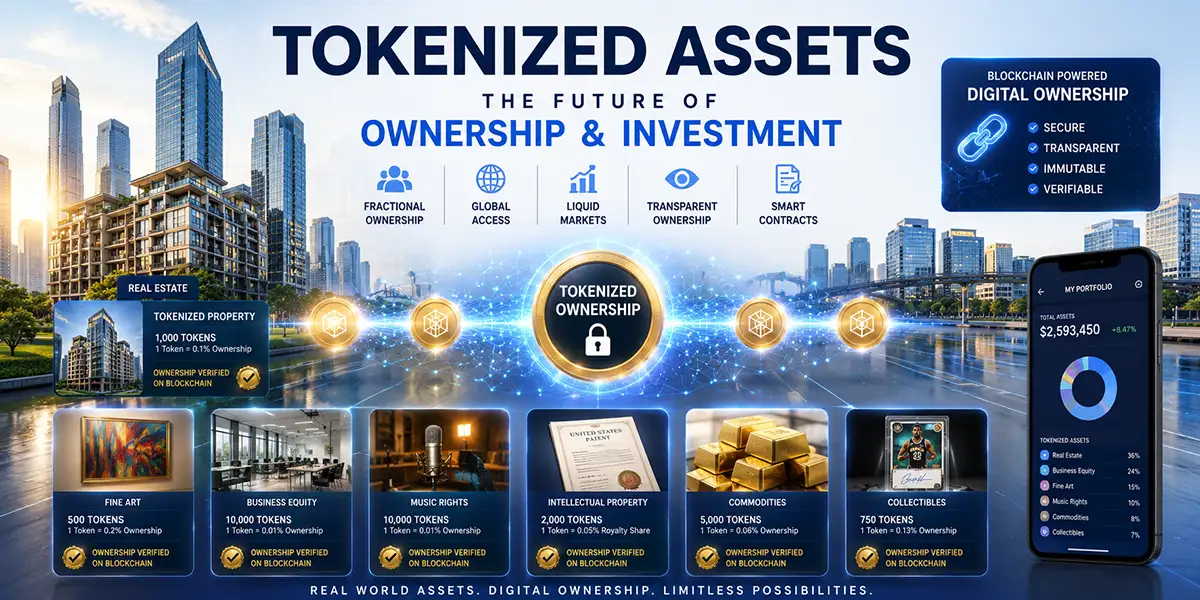
Tokenized Assets Explained: The Future of Ownership and Investment
For centuries, ownership has been represented by paper documents, certificates, deeds, contracts, and legal records. Whether buying a home, investing in a business, owning artwork, or holding shares in a company, proving ownership has traditionally relied on centralized systems and trusted institutions.
Blockchain technology is introducing a new approach known as tokenization. While the concept may sound complex, the underlying idea is relatively simple. Tokenization converts ownership rights into digital tokens that can be recorded, transferred, and verified on a blockchain.
Many experts believe tokenized assets could become one of the most significant developments in finance, investing, and digital ownership over the next decade.
What Are Tokenized Assets?
A tokenized asset is a digital representation of ownership recorded on a blockchain.
Think of a token as a digital certificate that represents a share of ownership in something valuable.
That asset could be:
- Real estate.
- Artwork.
- Business equity.
- Music royalties.
- Intellectual property.
- Collectibles.
- Commodities.
- Financial instruments.
The blockchain records who owns the token, when ownership changes, and the history of every transaction.
How Tokenization Works
Imagine a commercial building valued at $1 million.
Traditionally, an investor would need substantial capital to purchase all or part of that property.
With tokenization, ownership could be divided into 1,000 digital tokens worth $1,000 each.
Instead of purchasing the entire property, investors could buy a small percentage of ownership by acquiring tokens.
This process is often referred to as fractional ownership.
Blockchain technology tracks ownership and facilitates transfers without relying entirely on traditional paperwork and manual record systems.
Real Estate and Tokenized Assets
Real estate is often considered one of the most promising applications of tokenization.
Property ownership is typically expensive, illiquid, and time-consuming to transfer.
Tokenization could potentially:
- Reduce investment barriers.
- Enable fractional ownership.
- Increase liquidity.
- Simplify transactions.
- Expand global access to investment opportunities.
Rather than requiring large amounts of capital, investors could participate with much smaller investments.
Tokenizing Businesses and Equity
Businesses may also benefit from tokenization.
Ownership interests in private companies could potentially be represented through blockchain-based tokens.
This could provide:
- New fundraising opportunities.
- Improved ownership transparency.
- More efficient transfer of ownership rights.
- Global investor participation.
While regulations continue to evolve, many believe tokenized equity could become an important part of future capital markets.
Tokenized Intellectual Property
Creators and entrepreneurs may find some of the most interesting opportunities in tokenized intellectual property.
Digital assets such as:
- Music catalogs.
- Video content.
- Books.
- Patents.
- Software.
- Educational courses.
could potentially be tokenized and licensed through blockchain systems.
Smart contracts could automate royalty payments and revenue distribution, reducing administrative complexity while improving transparency.
The Benefits of Tokenized Assets
Tokenization offers several potential advantages compared to traditional ownership systems.
- Fractional Ownership: Investors can own smaller portions of valuable assets.
- Accessibility: More people can participate in investment opportunities.
- Liquidity: Assets may become easier to buy and sell.
- Transparency: Ownership records can be publicly verified.
- Efficiency: Transactions may require fewer intermediaries.
- Global Reach: Investors can participate across geographic boundaries.
These benefits have attracted growing interest from financial institutions, businesses, and technology companies.
Challenges Facing Tokenization
Despite its promise, tokenization faces important challenges.
- Regulatory uncertainty.
- Legal recognition of tokenized ownership.
- Technology adoption.
- Security concerns.
- Integration with existing financial systems.
As governments and industries develop standards, many of these challenges may become easier to address.
Why Tokenization Matters
The significance of tokenization extends beyond technology.
It represents a potential shift in how ownership itself is managed.
Historically, access to certain investments has been limited by geography, regulations, capital requirements, and administrative complexity.
Tokenized assets could lower many of these barriers while creating more efficient ownership systems.
The Future of Ownership and Investment
Today, most people think of blockchain primarily in terms of cryptocurrencies.
Tomorrow, blockchain may be remembered for something much larger: transforming ownership itself.
Buildings, businesses, intellectual property, investment funds, and digital assets could all be represented through blockchain-based ownership systems.
While widespread adoption will take time, the concept of tokenized assets is already influencing discussions about the future of finance, investing, and digital commerce.
As blockchain technology continues to mature, tokenization may become one of the most important tools for creating more accessible, transparent, and efficient ownership systems in the digital economy.

About the Author
Curtis Randall is an award-winning creative executive and future systems thinker helping people and businesses understand the future of work, technology, digital ownership, and creativity. Through CurtisRandall.com, and Sights.com, Curtis explores the systems shaping how people work, create, own, and build value in a rapidly changing world.
Connect with Curtis: LinkedIn · YouTube · Instagram · X · TikTok · Facebook · Threads
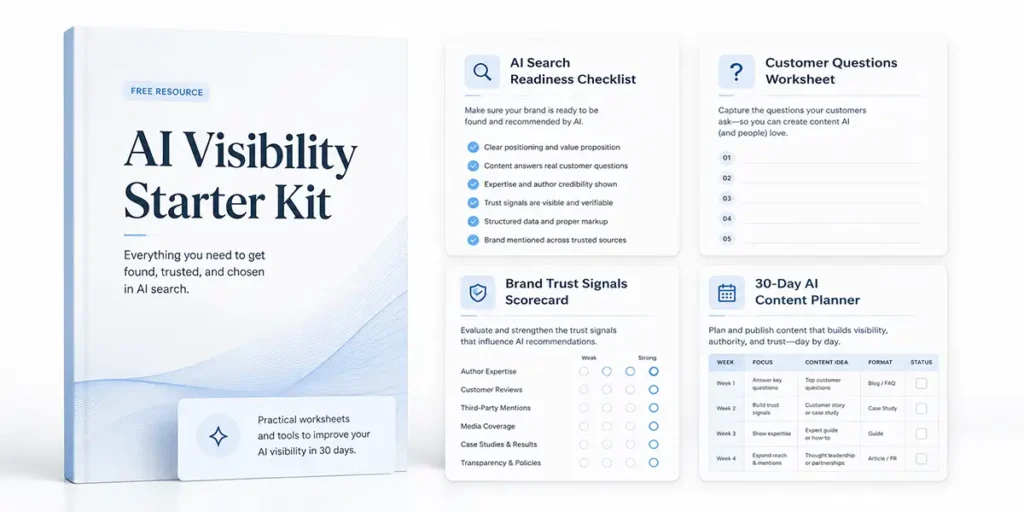
Want to Improve Your AI Visibility?
Download the free AI Visibility Starter Kit from Sights.com and start improving your content clarity, customer questions, trust signals, and AI search readiness.