
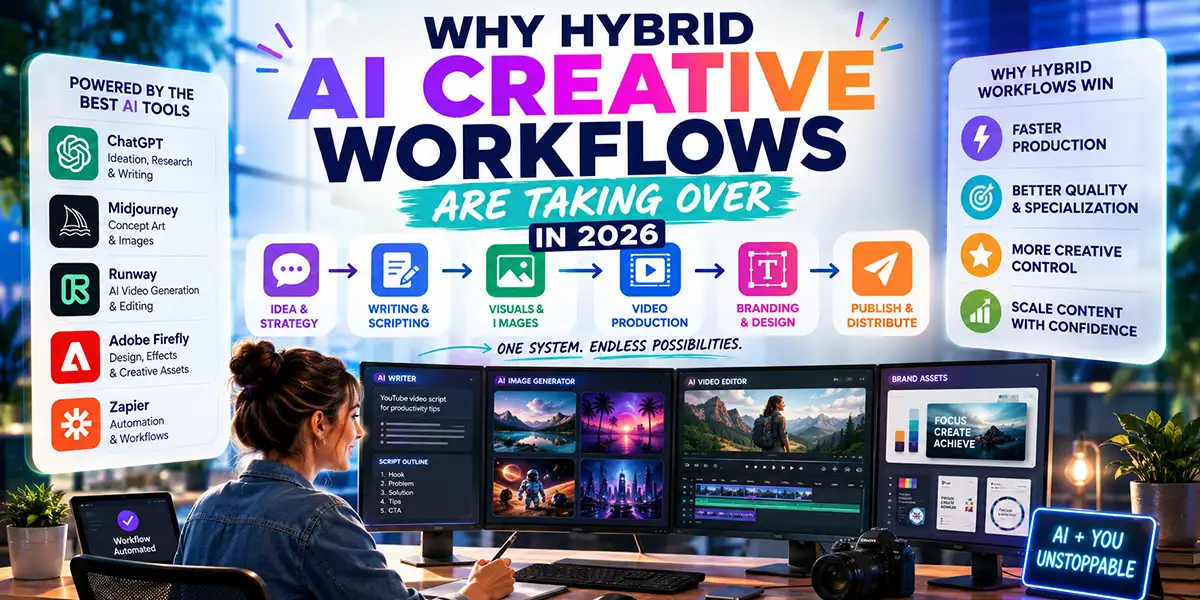
Why Hybrid AI Creative Workflows Are Taking Over in 2026
For a while, the conversation around AI focused on finding the one perfect tool. People wanted the best chatbot, the best image generator, or the best video platform. But that mindset is starting to look outdated. In 2026, the real shift is happening somewhere else. Creators, marketers, designers, and media teams are increasingly building Hybrid AI creative workflows that combine multiple tools into one connected production system.
Instead of relying on a single platform to do everything, modern creative teams are now mixing writing tools, image generators, video tools, design platforms, automation systems, and publishing workflows together. The result is faster execution, better specialization, and more creative control. This is becoming one of the most important developments in AI-powered content production.
The reason is simple: no single AI tool is best at everything. One platform may be strong at brainstorming and script development. Another may be better for image creation. A third may be more useful for video editing, branding assets, or distribution. Once creators realize that, the smartest move is no longer choosing one tool. It is building a system that allows the right tools to work together.
Why Hybrid AI creative workflows are becoming the new standard
AI is maturing quickly, but it is not maturing evenly. Some tools are becoming highly conversational. Others are becoming deeply visual. Some are designed for ideation, while others are optimized for structured production or platform publishing. This uneven development is exactly why hybrid workflows are winning.
Think about a typical content project. A creator may start by using an AI assistant to map out the topic, title, outline, and messaging angle. Then they may use an image tool to create visual concepts or thumbnail directions. After that, they may move into an AI video platform for motion, scene generation, or editing support. Finally, they may use a design or publishing tool to package the content for social media, ads, or a website.
That is not tool overload. That is workflow design. The creator is not randomly bouncing between platforms. They are using each system for what it does best.
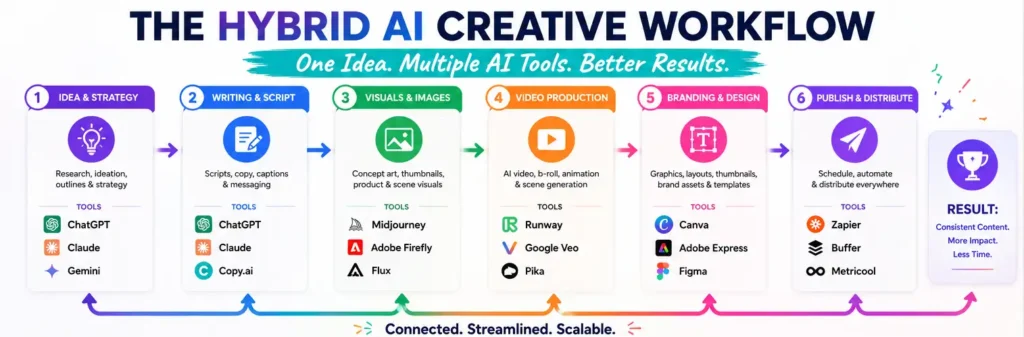
What Hybrid AI creative workflows actually look like
A hybrid workflow is not just “using a few AI tools.” It is a deliberate stack built around stages of work. For example:
- Strategy and writing: using an AI assistant for research framing, ideation, scripting, outlines, and copy drafts.
- Visual concept development: using image generation tools for moodboards, compositions, product concepts, and campaign visuals.
- Video production: using AI video platforms for scene generation, animation, enhancement, or edit acceleration.
- Brand packaging: using design tools for layouts, thumbnails, social assets, lead magnets, and ad creatives.
- Distribution and repurposing: using AI automation and scheduling systems to adapt and publish content across channels.
This layered model is far more powerful than expecting one platform to handle everything from concept to final delivery. It also gives creators more flexibility. If one tool improves or another tool becomes outdated, the workflow can evolve without rebuilding the whole process from scratch.
Why one AI tool is no longer enough
The early wave of AI adoption often came with an all-in-one mindset. People hoped a single assistant or creative app could replace an entire tool stack. But creative work is rarely that simple. Writing, branding, visual language, editing, and publishing all demand different kinds of control.
A writing model can be excellent at outlining a YouTube script but weak at generating production-ready visuals. A visual model may create striking images but fail to understand brand positioning. A video tool may generate motion beautifully but still need human editing to hit the right pacing, emotional tone, or call to action.
That is why creators using multiple specialized tools are increasingly outperforming creators who stay inside a single ecosystem. They can produce better work because they are not forcing the wrong tool to do the wrong job.
How Hybrid AI creative workflows improve speed and consistency
One of the biggest benefits of a hybrid workflow is speed. But speed by itself is not the full advantage. The real advantage is repeatable speed. Once a creator builds a workflow that consistently moves from idea to asset to finished content, production becomes smoother and easier to scale.
For example, a marketer can create a standard process where each campaign begins with an AI-generated brief, moves into visual exploration, then produces platform-specific content variations for video, email, and social. A YouTuber can create a system where every new video goes through the same stages: research, script, thumbnail concepts, supporting visuals, edits, and repurposed clips.
That creates consistency without killing creativity. In fact, it often improves creativity because the creator spends less time on friction and more time on judgment.
Hybrid workflows also reduce bottlenecks. If a team is waiting on visuals, they can move ahead with copy. If a video concept is not working, they can rapidly test alternatives. If a piece of content needs to be repurposed for another channel, they already have a system for adaptation. That kind of flexibility becomes a major advantage in fast-moving media environments.
Why Hybrid AI creative workflows give creators more control
There is a myth that using more AI means giving up control. In reality, the opposite is often true. A well-built hybrid workflow gives creators more control because it lets them choose where automation ends and where human direction begins.
For instance, you might use AI to generate ten visual directions, but you still decide which one best fits the brand. You might use AI to draft a video structure, but you still shape the storytelling rhythm. You might use automation to publish and repurpose content, but you still define the strategy behind what gets published and why.
The creator becomes more like a conductor than a manual operator. That is a significant shift. AI is not replacing the creative leader. It is reorganizing the work around direction, taste, systems, and decision-making.
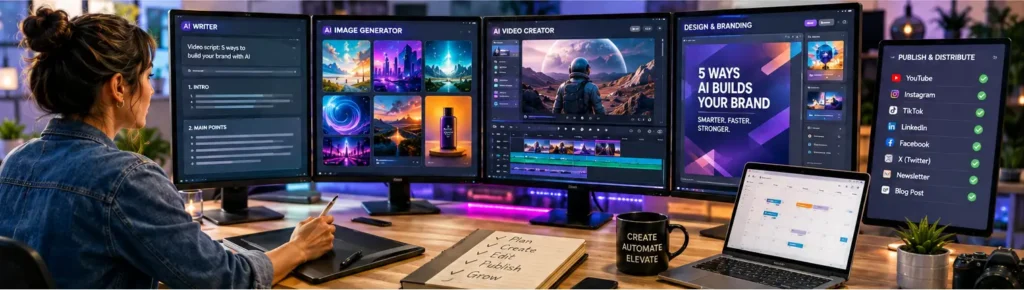
What this means for marketers, agencies, and media brands
For marketers and agencies, this trend is especially important. Clients increasingly expect more content, faster turnaround times, and better channel adaptation. That is difficult to deliver through traditional production alone. Hybrid AI workflows offer a way to increase output without automatically sacrificing quality.
Agencies can use hybrid systems to move from client brief to concept development to campaign asset production much faster than before. Media brands can use them to turn a single story into multiple formats: article, video, social clips, email summaries, and design assets. Founder-led businesses can create professional-looking content systems without needing a huge internal team.
This also changes the competitive landscape. The teams that win will not necessarily be the ones with the biggest budgets. They will be the ones that design the smartest systems.
The risks of Hybrid AI creative workflows
Of course, hybrid workflows are not automatically perfect. They come with risks. Too many disconnected tools can create confusion. Weak brand guidelines can lead to inconsistent output. Over-automation can flood channels with generic content that feels disposable. Teams can also lose time if they keep experimenting without building a clear repeatable system.
That is why the goal is not to collect tools. The goal is to build a stack with purpose. Every tool in the workflow should have a role. Every step should support quality, speed, or consistency. And every workflow should still be guided by brand taste, human review, and strategic intent.
The strongest AI workflows are not the most complicated. They are the most intentional.
How to start building Hybrid AI creative workflows
If you want to move in this direction, start small. Audit your current process and ask where the friction lives. Is ideation too slow? Are visuals taking too long? Is video production the bottleneck? Is repurposing inconsistent? Once you identify the slowest parts of your system, you can introduce the right tools in the right places.
A good first step is to create a three-part workflow:
- Planning: use AI for research, outlines, and creative direction.
- Production: use specialized tools for visuals, video, and design.
- Distribution: use AI-assisted repurposing and scheduling to extend the life of every asset.
From there, refine the process. Remove what is not helping. Keep what improves outcomes. Build templates. Document prompts. Create style guides. Turn one-off experiments into a reliable production system.
The future belongs to creative systems, not single tools
The biggest AI trend many creators are still missing is that the market is moving from individual tools to connected ecosystems. The winners in 2026 will not just know how to prompt. They will know how to design workflows.
Hybrid AI creative workflows are taking over because they reflect how real creative work actually happens. Content does not move in a straight line. It moves between ideas, visuals, edits, formats, and distribution. The more your system reflects that reality, the more effective it becomes.
The future of AI-powered creation is not about replacing the creator. It is about equipping the creator with a smarter, faster, more flexible operating system for modern media.
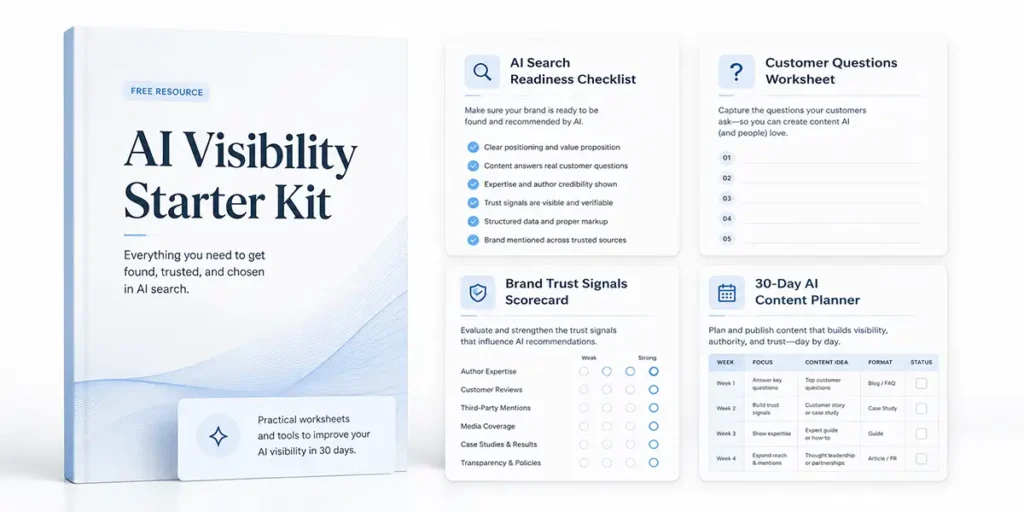
Want to Improve Your AI Visibility?
Download the free AI Visibility Starter Kit from Sights.com and start improving your content clarity, customer questions, trust signals, and AI search readiness.
If you are creating content, running campaigns, or building a brand in 2026, now is the time to stop depending on a single AI tool and start designing a workflow that actually fits your process. Review your current stack, identify the bottlenecks, and build a smarter system around strategy, visuals, video, and distribution.
Follow Sights.com for more practical insights on AI, content creation, branding, digital marketing, and creative tools — and start building a workflow that gives you speed and creative control.