
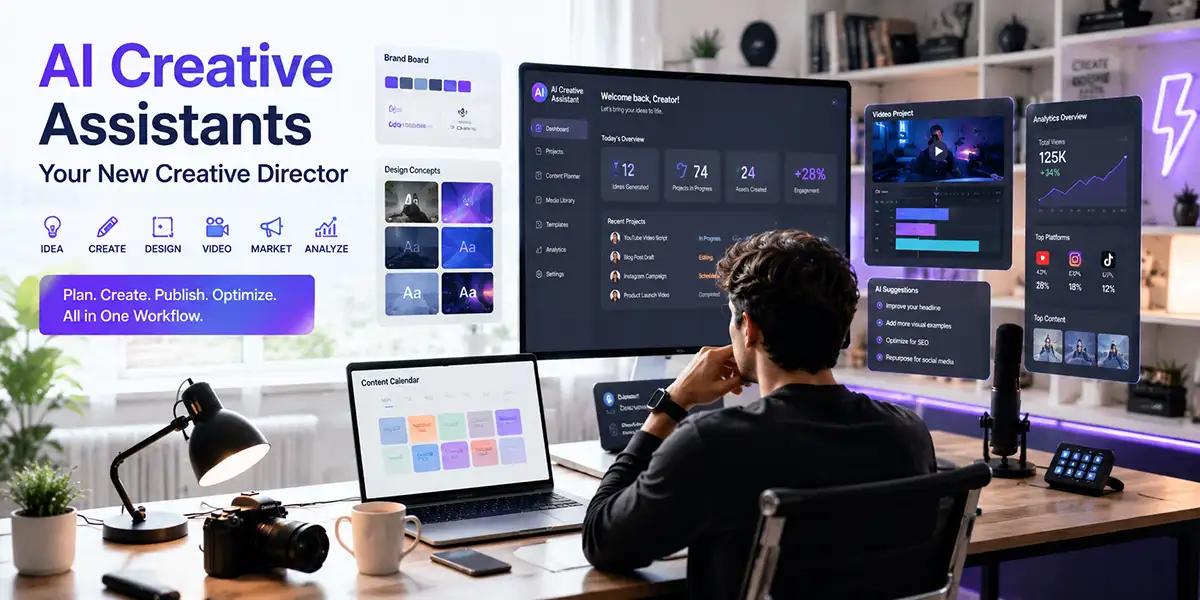
AI Creative Assistants Are Becoming Your New Creative Director
For years, artificial intelligence was treated like a collection of helpful tools. Need a headline? AI could generate one. Need a blog intro? AI could draft it. Need an image concept? AI could help you visualize it.
That was useful, but it was still limited. Most AI tools handled one task at a time. The creator still had to manage the strategy, organize the workflow, connect the pieces, and decide what actually worked.
Now the role of AI is changing. A new generation of AI Creative Assistants is emerging that can support entire creative workflows from idea to finished asset. Instead of simply generating content, these assistants are starting to act more like creative partners.
For creators, marketers, designers, agencies, and small businesses, this is a major shift. AI is no longer just something you use at the end of the process. It is becoming part of the planning, production, publishing, and optimization system.
Why AI Creative Assistants matter right now
The demand for content has never been higher. Businesses are expected to publish across websites, blogs, newsletters, YouTube, LinkedIn, Instagram, TikTok, Facebook, podcasts, and paid advertising channels.
That creates a serious production challenge. Most creators and small businesses do not have a full creative department. They do not have unlimited writers, designers, video editors, strategists, and social media managers waiting in the wings.
This is where AI Creative Assistants become valuable. They help reduce repetitive work, speed up production, and make it easier to keep a consistent creative system moving.
The opportunity is not just creating more content. The real opportunity is creating smarter workflows that help humans focus on strategy, taste, storytelling, and decision-making.
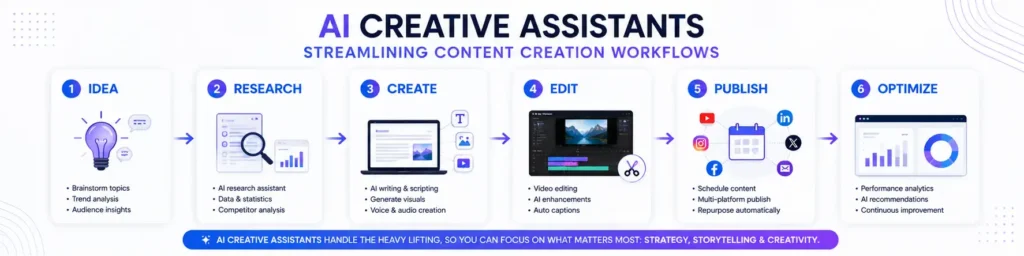
What are AI Creative Assistants?
An AI Creative Assistant is a system that helps with multiple stages of the creative process instead of only completing one isolated task.
A traditional AI writing tool might help you draft an article. An image generator might help create a visual. A video tool might help edit footage. But an AI Creative Assistant connects more of the process together.
It can help you move from idea to outline, from outline to draft, from draft to visual direction, from visual direction to publishing assets, and from publishing assets to repurposed content.
- Idea generation: developing topics, angles, headlines, hooks, and campaign concepts.
- Research support: organizing information, identifying useful trends, and building clearer creative direction.
- Content planning: creating outlines, calendars, publishing schedules, and campaign structures.
- Creative production: assisting with writing, design, video scripting, social posts, and marketing assets.
- Optimization: improving content for search, clarity, engagement, and repurposing.
This is why the role of AI is expanding. It is moving from “generate this one thing” to “help me manage this creative process.”
The shift from tools to creative partners
The biggest change is not just technical. It is how creators think about AI.
Instead of treating AI as a button that produces an output, creators are beginning to use it as a thinking partner. It can help explore ideas, challenge assumptions, organize messy thoughts, and turn raw concepts into workable creative plans.
Imagine planning a YouTube video. An AI Creative Assistant can help brainstorm the topic, define the audience, write the title options, outline the script, suggest thumbnail concepts, create social captions, and repurpose the final video into a blog post or email newsletter.
That does not mean AI becomes the creative director in the human sense. It means AI starts handling more of the coordination work that often slows creators down.
The creator still makes the final decisions. The creator still defines the taste, message, point of view, and emotional direction. But AI helps organize the moving parts.
How AI Creative Assistants are changing design
Design work has always involved a mix of creativity and production. The creative side includes taste, composition, story, emotion, and brand judgment. The production side includes resizing, formatting, testing variations, preparing assets, and making endless adjustments.
AI Creative Assistants are especially useful for the production side of design. They can help generate moodboard directions, suggest color palettes, create layout options, produce campaign variations, and speed up visual exploration.
- Brand exploration: testing visual directions before committing to a final concept.
- Layout variation: creating multiple versions of banners, thumbnails, ads, and social graphics.
- Visual consistency: helping keep colors, fonts, tone, and design language aligned.
- Asset support: creating supporting visuals for articles, videos, social posts, and product pages.
This does not remove the designer from the process. It gives the designer more room to focus on creative direction instead of getting trapped in repetitive asset production.
How AI Creative Assistants are transforming video production
Video production is another area where AI Creative Assistants are becoming extremely useful. Video requires planning, scripting, visuals, editing, captions, publishing, thumbnails, descriptions, and promotion.
That is a lot of work for a solo creator or small business. AI can now assist with many of those steps, making video content easier to produce and repurpose.
- Pre-production: generating ideas, hooks, scripts, outlines, shot lists, and scene directions.
- Production support: helping with voiceovers, captions, visual prompts, graphics, and supporting assets.
- Editing assistance: identifying highlights, improving pacing, organizing clips, and creating short-form edits.
- Repurposing: turning one video into social posts, blog articles, emails, and short clips.
This is where AI Creative Assistants can create a major advantage. One strong piece of content can become many useful assets without starting from scratch every time.
[INSERT IMAGE 2 HERE: AI Creative Assistants enabling one-person creator businesses]
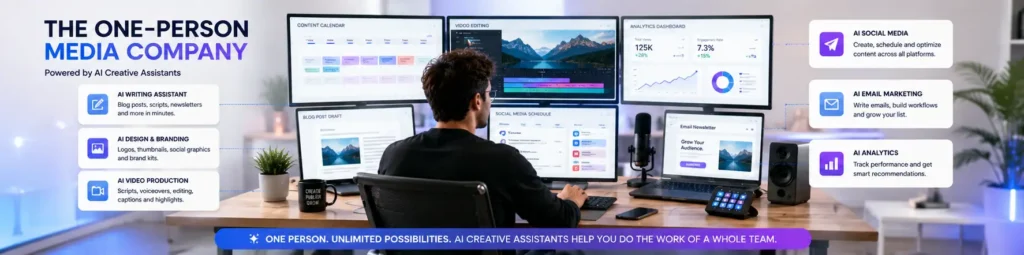
The rise of the one-person media company
One of the biggest outcomes of AI Creative Assistants is the rise of the one-person media company.
In the past, building a serious media brand required a team. You needed writers, editors, designers, video producers, marketers, and managers. Today, one creator can use AI-supported workflows to do the work of a much larger operation.
A solo entrepreneur can plan articles, create social campaigns, produce videos, design visuals, write emails, and analyze performance with the help of AI systems.
This does not mean one person should do everything forever. It means creators can now start faster, test ideas faster, and build momentum before hiring a larger team.
The advantage is shifting from team size to workflow intelligence. The creators who build smart systems will be able to produce more consistently than those who simply collect random tools.
How to use AI Creative Assistants effectively
The best way to use AI Creative Assistants is to treat them as workflow support, not creative replacement.
Start with your strategy. Know the audience, the message, the offer, and the purpose of the content. Then use AI to help speed up the steps around that strategy.
- Use AI for ideation: generate topic angles, hooks, titles, and content directions.
- Use AI for structure: create outlines, campaign plans, video scripts, and publishing workflows.
- Use AI for production: draft copy, create visual directions, generate social posts, and prepare content variations.
- Use AI for repurposing: turn one article, video, or podcast into multiple platform-specific assets.
- Use human judgment for the final pass: review, edit, fact-check, and refine everything before publishing.
The goal is not to remove creativity from the process. The goal is to remove friction from the process.
Mistakes to avoid when using AI Creative Assistants
AI Creative Assistants can improve speed and output, but they can also create problems if used carelessly. The biggest risk is publishing content that feels generic, disconnected, or overly automated.
- Publishing without review: AI-generated content still needs editing, fact-checking, and human judgment.
- Letting AI define your brand voice: your brand should guide the AI, not the other way around.
- Over-automating creative decisions: speed is useful, but taste still matters.
- Ignoring original insight: audiences respond to perspective, experience, and useful thinking.
- Chasing every tool: the goal is not to collect platforms. The goal is to build a workflow that works.
The strongest AI workflows are still guided by human creativity. AI can help you move faster, but it should not flatten your voice or remove your point of view.
The future of AI Creative Assistants
The next generation of AI Creative Assistants will likely become even more integrated into daily creative work. They may help manage content calendars, coordinate campaigns, monitor performance, recommend content ideas, and automatically adapt assets for different platforms.
That will make creative systems more powerful, but it will also make human direction more important. When everyone can create more content, the real difference will come from taste, trust, clarity, and original thinking.
AI can help create faster. Humans decide what is worth creating.
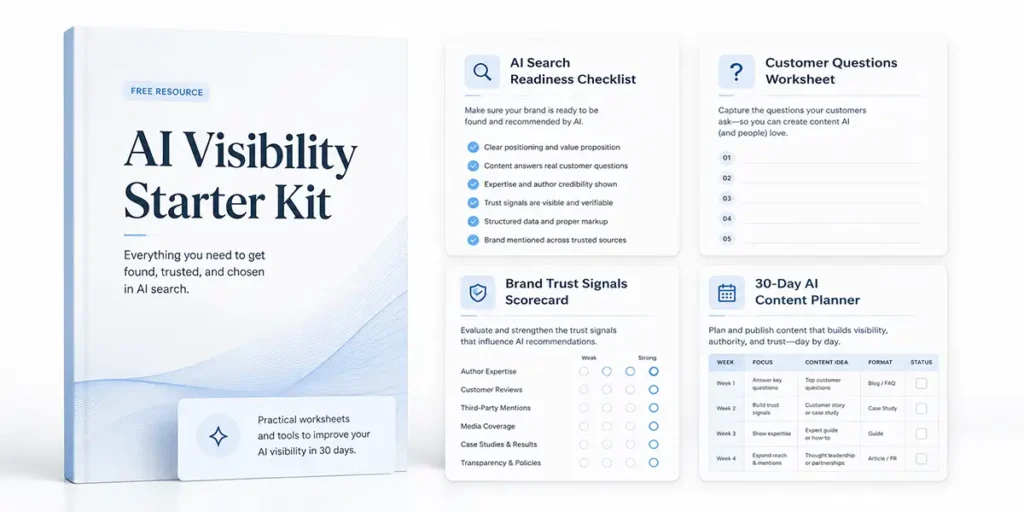
Want to Improve Your AI Visibility?
Download the free AI Visibility Starter Kit from Sights.com and start improving your content clarity, customer questions, trust signals, and AI search readiness.
Final thoughts
AI Creative Assistants are quickly becoming one of the most important tools in modern content creation. They help creators move faster, reduce production bottlenecks, and build more consistent workflows.
The future belongs to creators who learn how to combine AI-powered efficiency with human creativity. Those who embrace both will be better positioned to build stronger brands, produce more valuable content, and thrive in the next era of digital creation.
Follow Sights.com for more practical insights on AI, content creation, branding, digital marketing, and creative tools — and start building a workflow that gives you speed and creative control.