
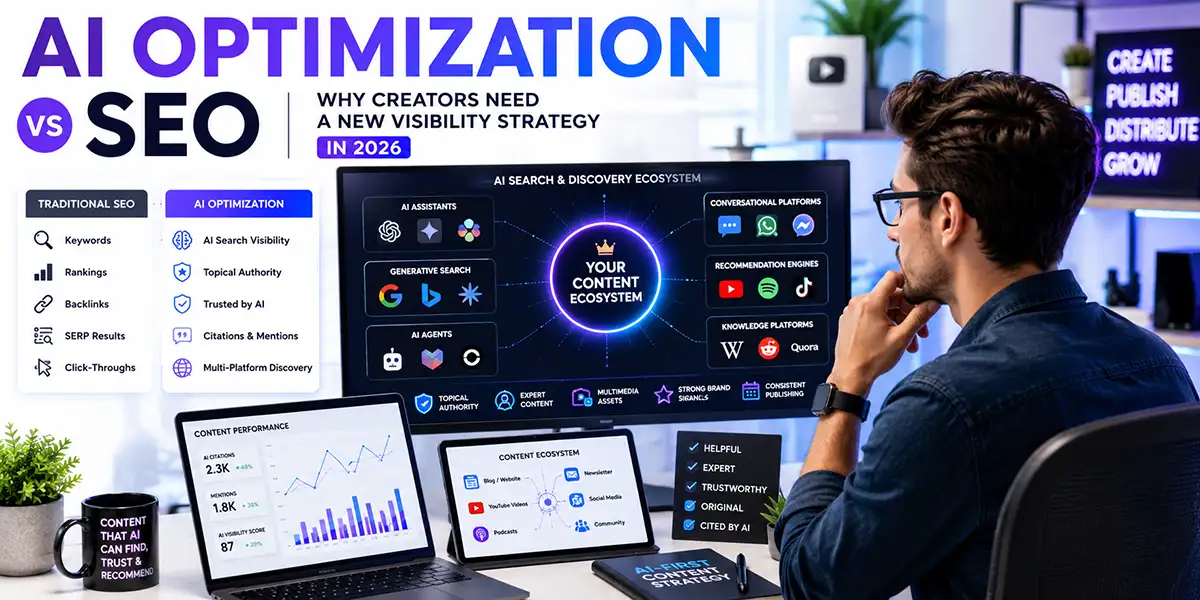
AI Optimization vs SEO: Why Creators Need a New Visibility Strategy in 2026
For more than two decades, SEO has been the foundation of online visibility. Businesses, creators, marketers, and publishers have spent countless hours optimizing websites, targeting keywords, building backlinks, and improving rankings on search engines.
But a major shift is happening.
Today, more people are discovering information through AI assistants, AI-powered search experiences, and conversational interfaces. Instead of clicking through ten blue links, users are increasingly asking questions and receiving direct answers.
This change is creating a new discipline known as AI Optimization. While SEO remains important, creators and businesses that want to stay visible in the future must understand how AI systems discover, evaluate, and recommend content.
The future of visibility is no longer just about ranking. It is about becoming a trusted source that AI systems choose to reference, summarize, and recommend.
What Is AI Optimization?
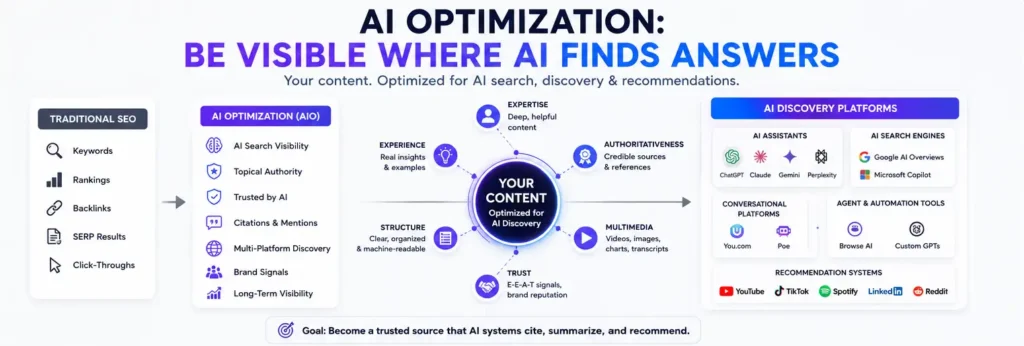
AI Optimization is the process of creating and structuring content so it can be understood, trusted, and surfaced by AI-powered systems.
Unlike traditional SEO, which focuses primarily on search engine rankings, AI Optimization focuses on making content discoverable within:
- AI assistants
- Generative search engines
- Large language models
- AI-powered recommendation systems
- Agent-based discovery platforms
- Conversational search experiences
The goal is not simply to appear in search results. The goal is to become a source that AI systems trust enough to cite and recommend.
Why Traditional SEO Is No Longer Enough
SEO is far from dead. In fact, many SEO fundamentals remain critical. High-quality content, strong technical performance, structured information, and authority signals continue to matter.
However, the way people discover information is changing rapidly.
Users are increasingly asking:
- “What’s the best AI video tool?”
- “How do I start a creator business?”
- “What are the latest digital marketing trends?”
Instead of browsing multiple websites, users often receive summarized answers generated by AI systems.
This means your content must be optimized not only for search engines but also for AI interpretation and recommendation.
The Rise of Generative Engine Optimization (GEO)
A related concept gaining attention is Generative Engine Optimization (GEO).
GEO focuses specifically on increasing the likelihood that content will be referenced within AI-generated answers.
Successful GEO strategies often include:
- Clear topic authority.
- Structured content.
- Expert insights.
- Original research.
- Helpful examples.
- Reliable sourcing.
- Consistent publishing.
The more valuable and trustworthy your content becomes, the more likely AI systems are to surface it during relevant conversations.
How AI Systems Evaluate Content
Many creators still think in terms of keyword density and rankings. AI systems operate differently.
Modern AI models evaluate:
- Topical expertise.
- Content depth.
- Consistency.
- Authority signals.
- User engagement.
- Content freshness.
- Cross-platform presence.
- Brand reputation.
Rather than looking at individual pages in isolation, AI systems often evaluate the overall authority of a creator or brand across multiple channels.
This means your website, YouTube channel, social media profiles, newsletters, podcasts, and articles all contribute to your discoverability.
Why Multimedia Content Matters More Than Ever
One of the biggest changes in AI Optimization is the growing importance of multimedia content.
AI systems increasingly understand and process:
- Videos.
- Podcasts.
- Images.
- Transcripts.
- Articles.
- Social media posts.
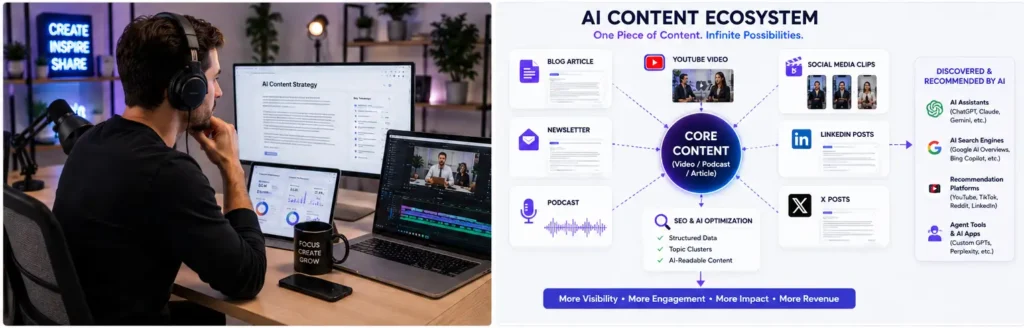
This creates opportunities for creators who produce content across multiple formats.
A single video podcast can become a blog article, newsletter, social media content, and searchable transcript. Together, these assets create stronger signals for AI-powered discovery.
Building an AI Optimization Strategy
Creators who want to improve AI visibility should focus on five core areas.
1. Build Topic Authority
Create clusters of content around specific topics rather than publishing random articles.
2. Publish Original Insights
AI systems increasingly value unique perspectives that cannot be found elsewhere.
3. Use Structured Content
Clear headings, lists, summaries, and logical organization help AI systems understand your content.
4. Create Multi-Format Content
Repurpose articles into videos, podcasts, newsletters, and social media content.
5. Strengthen Your Brand
As AI systems become more sophisticated, brand authority and trust become increasingly important ranking factors.
The Future of Search Is Discovery
The future of visibility is not simply about ranking on Google. It is about becoming discoverable across an expanding ecosystem of AI-powered platforms.
Creators who embrace AI Optimization today will have a significant advantage as search evolves into conversational discovery.
SEO remains important, but it is no longer the entire game. The winners of the next generation of digital marketing will be those who build authority, create valuable content, and become trusted sources across multiple formats and platforms.
Start Optimizing for AI Today
Every article, video, podcast, and social media post you publish contributes to your digital footprint. The question is no longer whether AI will influence content discovery—it already does.
Now is the time to build an AI Optimization strategy that positions your brand, content, and expertise for the future of search.
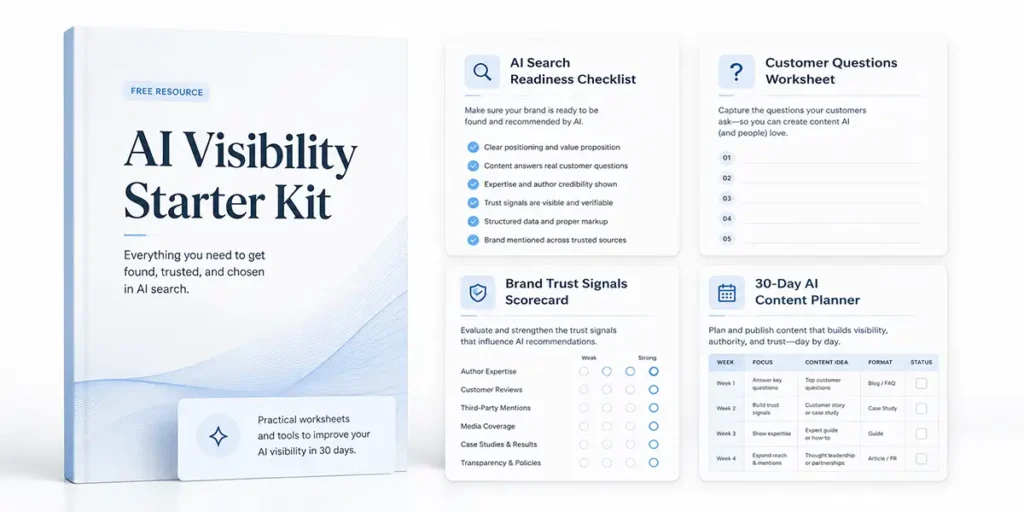
Want to Improve Your AI Visibility?
Download the free AI Visibility Starter Kit from Sights.com and start improving your content clarity, customer questions, trust signals, and AI search readiness.