
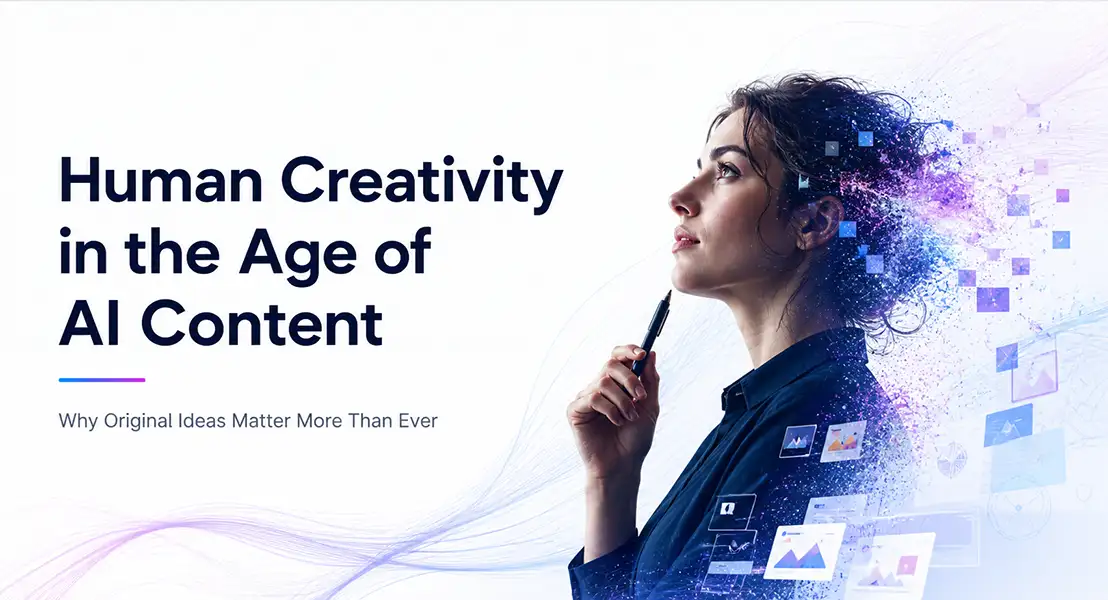
Human Creativity in the Age of AI Content: Why Original Ideas Matter More Than Ever
Artificial intelligence has changed the creative world almost overnight. Writers can generate drafts in seconds. Designers can create visual concepts from a simple prompt. Video creators can build scenes, edit clips, and develop storyboards faster than ever before. Marketers can create content plans, headlines, emails, scripts, and social posts with the help of AI tools.
For creators and businesses, this is exciting. AI can save time, reduce production costs, and help turn ideas into finished content much faster. But it also raises an important question: if everyone can create more content with AI, what will make any of it stand out?
The answer is human creativity.
As AI-generated content becomes more common, originality, taste, storytelling, and personal perspective become even more valuable. The future of creativity will not simply belong to whoever produces the most content. It will belong to creators, brands, and businesses that use AI wisely while keeping human ideas at the center.
The Rise of AI-Generated Content
AI-generated content is now everywhere. It appears in blog posts, social media graphics, YouTube videos, music, product images, ads, newsletters, and even film production workflows. The tools are improving quickly, and the barrier to entry is lower than ever.
That means more people can create. A small business can produce marketing content without hiring a large team. A solo creator can build visuals, scripts, and promotional materials faster. A creative agency can explore more concepts before presenting ideas to a client.
In many ways, this is a positive shift. AI gives more people access to creative production. It helps remove technical barriers. It allows creators to experiment, test, and improve ideas with greater speed.
But there is also a downside.
When content becomes too easy to generate, the internet can quickly become filled with material that feels generic, repetitive, or low-effort. Audiences may start to see more content, but not necessarily better content. This is why human creativity matters more than ever.
Why Human Creativity Still Matters
AI can generate content, but it does not truly understand meaning the way people do. It can imitate styles, summarize information, and produce polished drafts, but it does not have lived experience, emotional memory, cultural awareness, personal taste, or a real point of view.
Human creativity brings the things AI cannot fully replace:
Emotion. People connect with stories because they feel something. A human creator understands tension, humor, vulnerability, excitement, and timing.
Taste. AI can produce many options, but humans decide what is good, what fits, what feels fresh, and what should be removed.
Original perspective. The strongest creative work often comes from a unique way of seeing the world. AI can assist with expression, but the point of view should come from the creator.
Trust. Audiences want to know there is intention behind what they are seeing. When content feels authentic, people are more likely to pay attention.
Purpose. Good creative work is not just content. It has a reason to exist. It informs, inspires, entertains, persuades, or solves a problem.
AI can help build the content, but people still need to decide why the content matters.
A Growing Push for Human-Made Content
One reason this topic is timely is that platforms and creative institutions are beginning to draw clearer lines around AI-generated work.
A new short-form video app called Divine has launched as a revival of the spirit of Vine, with a focus on human-made creativity and a push against low-quality AI-generated content. The app is positioning itself around short, human-created videos and includes an archive of original Vine clips. This is a signal that some audiences and creators are hungry for content that feels more personal, raw, and human. ( thequardian.com )
The film industry is also responding. The Academy of Motion Picture Arts and Sciences has updated rules around AI and awards eligibility, emphasizing that human authorship must remain central. Acting nominations are tied to performances by humans with consent, and screenplays must be human-authored. The Academy has made it clear that AI can be part of the conversation, but human creative contribution remains essential. ( apnews.com )
These examples show a broader shift. The creative world is not rejecting AI entirely. Instead, it is trying to define where AI belongs and where human authorship must be protected.

AI Should Be a Creative Assistant, Not the Creative Voice
The best way to think about AI is as a creative assistant. It can help you brainstorm, draft, organize, edit, research, and produce. But it should not replace your voice, your values, or your creative direction.
For example, a writer can use AI to generate an outline, but the final article should still reflect human insight and experience. A designer can use AI to create mood board directions, but the final design still needs brand judgment and visual taste. A marketer can use AI to create campaign variations, but the strategy still needs to come from an understanding of the audience.
AI works best when it is guided by a clear human intention.
Instead of asking, “Can AI create this for me?” creators should ask, “How can AI help me make this idea stronger?”
That small shift makes a big difference.
The Danger of Generic Content
One of the biggest risks in the age of AI content is sameness.
Because many people are using similar tools and similar prompts, a lot of AI-generated content can start to look and sound alike. Blog posts can feel formulaic. Images can feel overly polished but emotionally empty. Social media captions can sound professional but forgettable. Videos can look impressive but lack a real story.
This creates an opportunity for creators who are willing to go deeper.
If AI makes average content easier to produce, then above-average content becomes more valuable. Strong creative direction, personal experience, original research, thoughtful opinions, and distinctive branding will help content stand out.
For businesses, this means AI should not be used just to publish more. It should be used to create better.
How Creators Can Keep Their Work Human
Creators can use AI without losing authenticity. The key is to build a process where human judgment leads and AI supports.
Start with your own idea. Before opening an AI tool, define the message. What are you trying to say? Who is it for? Why does it matter?
Use AI for exploration. Let AI help you generate directions, outlines, variations, and rough concepts. Treat these as starting points, not final answers.
Add personal insight. Include your experience, opinion, examples, stories, and perspective. This is where the content becomes yours.
Edit with taste. Remove generic phrases. Improve the rhythm. Make the content clearer, more useful, and more emotionally engaging.
Protect your brand voice. Every piece of content should sound and feel like it belongs to your brand. AI should adapt to your voice, not the other way around.
Be transparent when needed. In some cases, especially with visual, audio, or news-related content, it may be important to disclose how AI was used. Trust is becoming part of creative value.
What This Means for Brands and Businesses
For brands, the rise of AI content is both a challenge and an opportunity.
The challenge is that audiences may become more skeptical. If people feel overwhelmed by generic AI content, they will be quicker to ignore anything that feels automated or shallow.
The opportunity is that brands with a clear voice and strong point of view can stand out even more.
A business can use AI to speed up content creation, but it still needs a human-centered strategy. It needs to understand its audience, its values, its promise, and the emotion it wants to create.
For a site like Sights.com, this is an ideal topic because it speaks directly to the future of creativity, digital media, marketing, and AI tools. The message is balanced: AI is powerful, but human creativity is still the reason content connects.
The Future Belongs to Human-Led AI Creativity
The creative future will not be AI-only. It will be human-led and AI-assisted.
Creators who reject AI completely may miss useful tools that can improve their workflow. But creators who rely on AI completely may lose the originality that makes their work valuable.
The strongest approach is somewhere in the middle.
Use AI to move faster. Use it to explore more ideas. Use it to reduce repetitive work. Use it to help with research, structure, drafts, thumbnails, scripts, and production planning.
But keep the creative heart human.
That means your story, your judgment, your taste, your emotional intelligence, and your point of view should guide the final result.
Final Thoughts
AI-generated content is changing the creative industry, but it is not the end of human creativity. In many ways, it is making human creativity more important.
When content becomes easier to produce, originality becomes more valuable. When tools become more powerful, direction becomes more important. When audiences see more automated content, authenticity becomes a competitive advantage.
The creators and brands that win in this new era will not be the ones who use AI the most. They will be the ones who use AI with the most purpose.
AI can help create the content.
But human creativity gives it meaning.
About the Author
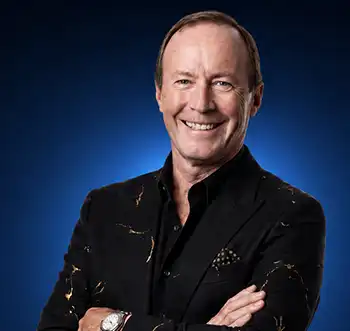
Curtis Randall is an award-winning creative executive and future systems thinker helping people and businesses understand the future of work, technology, digital ownership, and creativity. Through CurtisRandall.com, and Sights.com, Curtis explores the systems shaping how people work, create, own, and build value in a rapidly changing world.
Connect with Curtis: LinkedIn · YouTube · Instagram · X · TikTok · Facebook · Threads
Want to Improve Your AI Visibility?
Download the free AI Visibility Starter Kit from Sights.com and start improving your content clarity, customer questions, trust signals, and AI search readiness.