
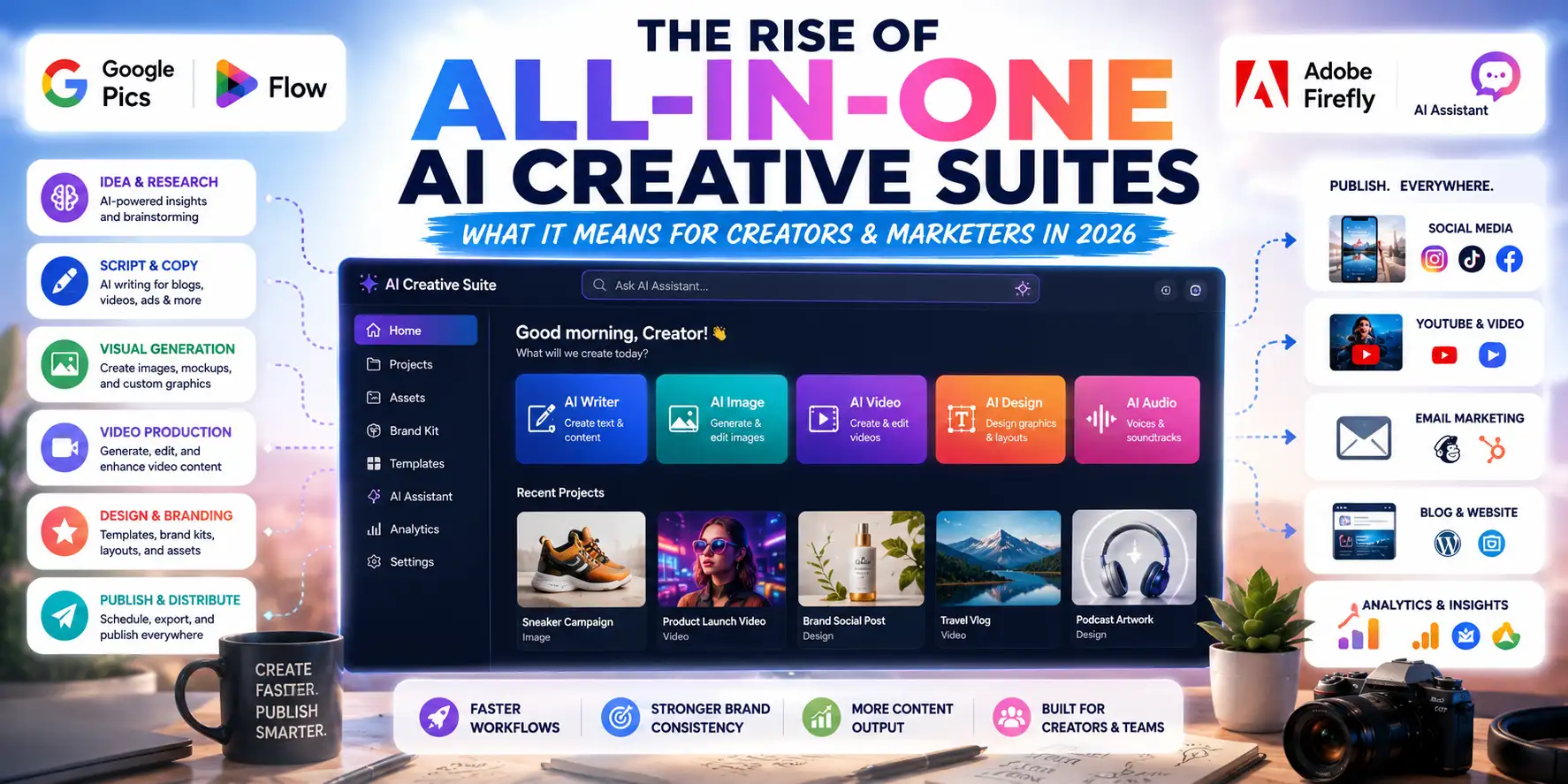
The Rise of All-in-One AI Creative Suites: What It Means for Creators and Marketers in 2026
For the past two years, AI adoption in creative work has often been about finding the best individual tool. One app for writing. Another for image generation. Another for video. Another for design. Another for publishing. But in 2026, that model is starting to shift. The market is moving toward all-in-one AI creative suites that aim to bring multiple stages of the creative process into one connected workspace.
That shift became much clearer this month. At Google I/O 2026, Google introduced Google Pics, a new AI image creation and editing tool, while continuing to expand Flow into a broader media creation environment. Google says Flow users have already created more than 1.5 billion images and videos, and the company’s latest update pushes the platform beyond simple generation toward image-first workflows, flexible asset management, and more precise editing. Adobe is moving in a similar direction with Firefly AI Assistant, which it describes as a unified conversational interface across Creative Cloud workflows. :contentReference[oaicite:0]{index=0}
For creators, marketers, and media teams, this matters because it changes how content may get made. The big question is no longer just which tool is best. The bigger question is which ecosystem can support the fastest, smartest, and most brand-consistent workflow from idea to finished output.
Why all-in-one AI creative suites are rising now
The rise of all-in-one AI creative suites is not happening by accident. It is a response to a real pain point in the market. Most creators and marketing teams already use multiple tools, but moving between them creates friction. Files get lost. Brand consistency slips. Assets need to be exported, reformatted, renamed, and re-imported. What looks efficient on paper often turns into workflow drag in practice.
That is why the newest AI products are increasingly about orchestration, not just generation. Google’s recent Flow update added stronger image creation support, more flexible asset management, and improved editing controls. Adobe’s Firefly AI Assistant is designed to orchestrate multi-step workflows across Creative Cloud apps so users can describe the outcome they want rather than manually bouncing through separate tools. :contentReference[oaicite:1]{index=1}
This is a significant change. The industry is moving from isolated AI features toward something closer to a creative operating system. Instead of one prompt producing one output, the software stack is being redesigned to help users move across ideation, generation, editing, refinement, and delivery in one more connected experience.
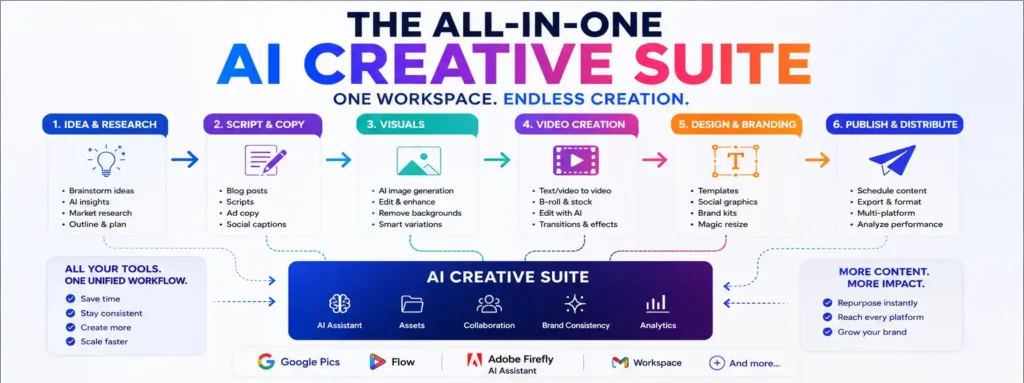
What Google and Adobe are signaling about all-in-one AI creative suites
Google’s I/O 2026 announcements made its direction clear. Google described Google Pics as a new AI image creation and editing tool built on its latest model, with object-level editing and more direct creative control. It also highlighted broader creation updates across Workspace and Flow, showing that image creation, media generation, and productivity are becoming increasingly connected. :contentReference[oaicite:2]{index=2}
Flow is especially important because it reflects where these platforms are going. The product is no longer framed only as a video generator. Google’s February 2026 update explicitly said users wanted more than that, and the redesign brought image generation to the forefront while adding stronger asset management and editing precision. That is exactly the logic behind a suite strategy: keep users inside one environment longer by covering more of the workflow. :contentReference[oaicite:3]{index=3}
Adobe is pushing from the other side. Rather than building entirely new standalone products, it is layering AI orchestration across an already mature creative ecosystem. Firefly AI Assistant is positioned as a conversational layer that can coordinate tasks across Creative Cloud apps. Adobe also says the assistant can orchestrate multi-step workflows, which points to the same destination as Google’s strategy: less tool switching, more guided execution, and a stronger connection between creative intent and production output. :contentReference[oaicite:4]{index=4}
How all-in-one AI creative suites could help creators and marketers
For creators and marketers, the appeal of all-in-one AI creative suites is obvious. The promise is not simply “more AI.” The promise is fewer bottlenecks.
- Faster ideation: Brainstorming, scripting, and concept development can happen closer to asset creation.
- Stronger consistency: Visuals, messaging, and brand assets are easier to manage inside one environment.
- Less workflow friction: Fewer exports, fewer handoffs, and fewer disconnected apps.
- Better repurposing: One source concept can be adapted into multiple assets more efficiently.
- More accessible production: Smaller teams can create more polished content without a huge stack.
This matters especially for modern content businesses. A brand may need an article, social graphics, video clips, thumbnails, ad variants, and email assets for one campaign. In a fragmented workflow, that can mean constant context switching. In a suite-based workflow, those outputs can potentially stay connected from the start.
The risk of choosing the wrong all-in-one AI creative suites
Of course, there is a tradeoff. While suites can simplify workflows, they can also lock creators into one ecosystem. If the suite is weak in one critical area, users may sacrifice quality for convenience. A platform might be good at image generation but weak at editing. Or strong at creative ideation but limited in publishing flexibility. That is why the rise of all-in-one AI creative suites does not automatically eliminate the need for hybrid workflows.
In fact, many teams will probably end up using a mix of both approaches. They may choose one main suite for orchestration and asset management, then layer in best-in-class tools where needed. So while the market is moving toward connected ecosystems, the smartest users will still think carefully about where quality, control, and flexibility matter most.
Another concern is brand sameness. As more people use the same AI layers and built-in templates, content can start to feel generic. That means the real competitive edge will still come from human direction, brand taste, and original strategic thinking.
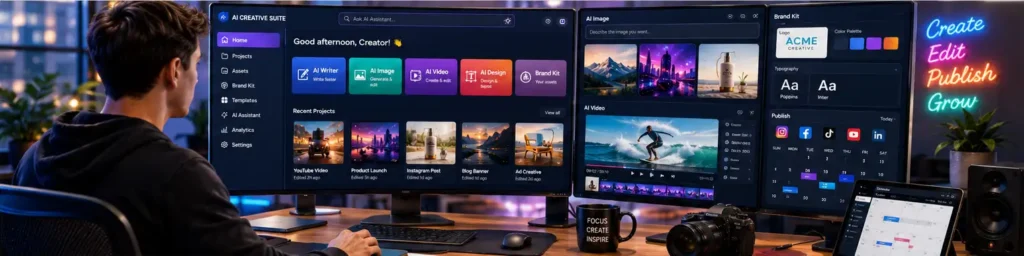
Why this trend matters beyond software features
This is not just a product trend. It is a workflow trend. It tells us something important about where the AI market is heading. The next phase of creative AI is not only about generating content faster. It is about shaping a more complete environment where planning, generation, refinement, asset organization, and delivery all happen closer together.
That is why this topic matters so much for Sights.com readers. If you create content, run campaigns, manage branding, or build media products, then the software choices you make now could shape your production system for years. The companies building these suites are not just competing for usage. They are competing to become the creative layer where your team thinks, makes, edits, and ships.
How to evaluate all-in-one AI creative suites in 2026
If you are comparing platforms, do not judge them only by one flashy demo. Look at the full workflow. Ask practical questions:
- Can the platform move smoothly from idea to final output?
- Does it support your brand system and content formats?
- How strong are editing and refinement tools after generation?
- Can your team collaborate and manage assets efficiently?
- Will the platform save time without lowering quality?
Those questions matter more than one impressive prompt result. In real creative work, the best platform is rarely the one with the single most dramatic output. It is the one that fits into a repeatable system and helps your team publish consistently at a high level.
The future of all-in-one AI creative suites
The bigger picture is becoming easier to see. AI creation tools are moving toward suites, assistants, and orchestrated workspaces. Google’s Pics and Flow updates, along with Adobe’s Firefly AI Assistant, all point to the same market shift: creative AI is becoming more integrated, more conversational, and more system-driven. :contentReference[oaicite:5]{index=5}
That does not mean standalone tools disappear. It means the center of gravity is changing. The next major battleground is not just image quality or video realism. It is workflow ownership.
The creators and marketers who adapt fastest will be the ones who understand this early. They will not just chase tools. They will build systems.
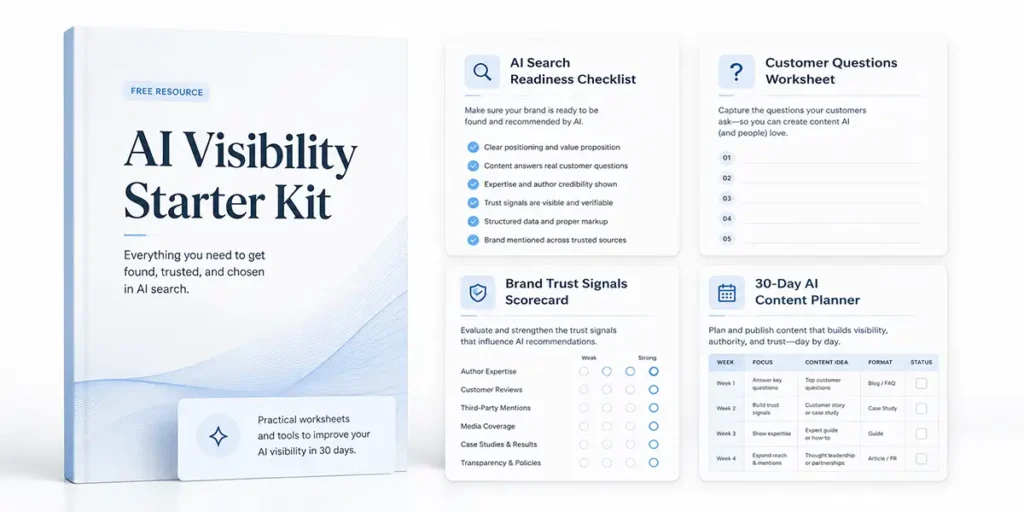
Want to Improve Your AI Visibility?
Download the free AI Visibility Starter Kit from Sights.com and start improving your content clarity, customer questions, trust signals, and AI search readiness.
If you are trying to build a stronger content engine in 2026, now is the time to review your workflow and decide where an integrated AI suite fits into your process. Look at your bottlenecks, map your tools, and choose systems that improve speed, consistency, and creative control.
Explore more practical insights on Sights.com for AI, branding, digital marketing, video, and creative tools — and start building a workflow that helps your brand create smarter, not just faster.