
How Blockchain Is Creating a New Era of Digital Ownership
For centuries, ownership has been relatively simple to understand. If you bought a house, a car, or a piece of artwork, you owned it. There were legal records, receipts, and documentation that proved your ownership.
In the digital world, ownership becomes far less clear. We create content, purchase digital products, build online identities, and store valuable information on platforms we do not control. As the digital economy continues to expand, one of the most important questions emerging is: who actually owns digital assets?
Blockchain technology is providing a potential answer. While many people associate blockchain with cryptocurrency, its long-term impact may be far broader. Blockchain has the potential to create a new foundation for digital ownership, allowing individuals and businesses to prove ownership of assets, identities, and intellectual property in ways that were previously impossible.
What Is Digital Ownership?
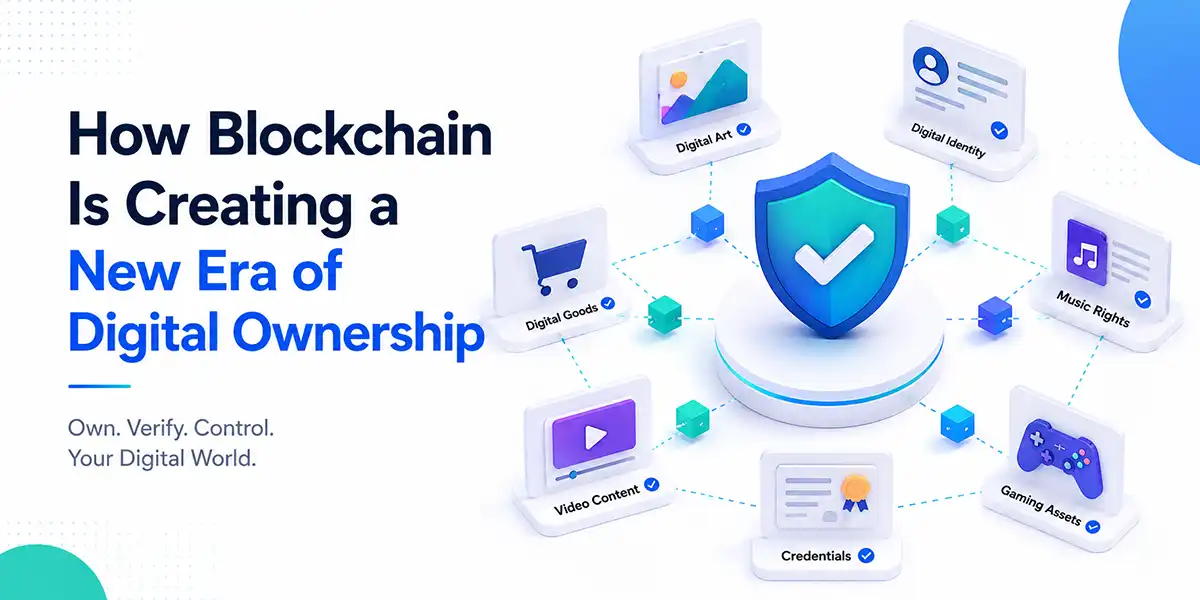
Digital ownership refers to the ability to control, transfer, verify, and benefit from digital assets. These assets can include:
- Digital artwork
- Music and media files
- Online identities
- Domain names
- Virtual real estate
- Gaming assets
- Certificates and credentials
- AI-generated content
- Intellectual property
The challenge is that many digital assets exist on centralized platforms. While users may create or purchase them, control often remains in the hands of the platform itself.
The Problem With Today’s Internet
Much of the modern internet operates through centralized services. Social media platforms, marketplaces, cloud storage providers, and digital content platforms manage the systems that store and distribute our digital assets.
This model has created incredible convenience, but it also introduces limitations:
- Accounts can be suspended or removed.
- Digital purchases may be restricted or revoked.
- Ownership records often depend on platform databases.
- Creators have limited control over distribution.
- Digital identities remain fragmented across services.
As digital assets become more valuable, these limitations become increasingly important.
How Blockchain Changes Ownership
Blockchain introduces a different model.
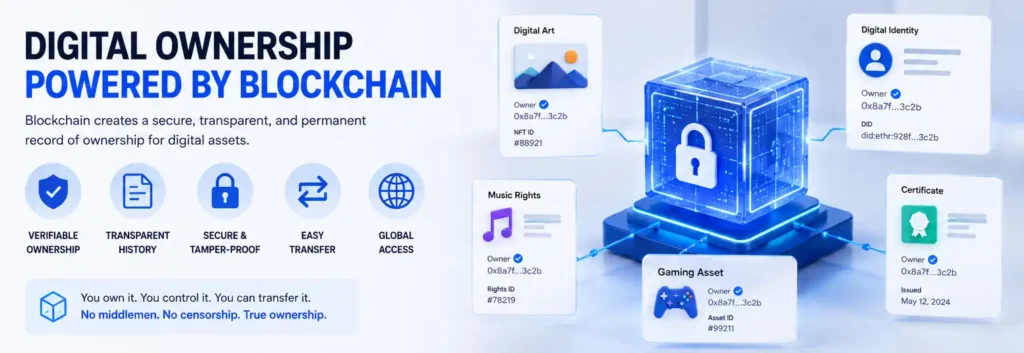
Instead of relying on a single company or platform to maintain records, blockchain stores information across a distributed network. Transactions and ownership records are verified by multiple participants, creating a transparent and tamper-resistant system.
This creates several important advantages:
- Verifiable ownership
- Transparent transaction history
- Reduced reliance on intermediaries
- Global accessibility
- Transferable digital assets
- Permanent record keeping
For the first time, digital assets can have ownership characteristics that closely resemble physical property.
Real-World Examples of Digital Ownership
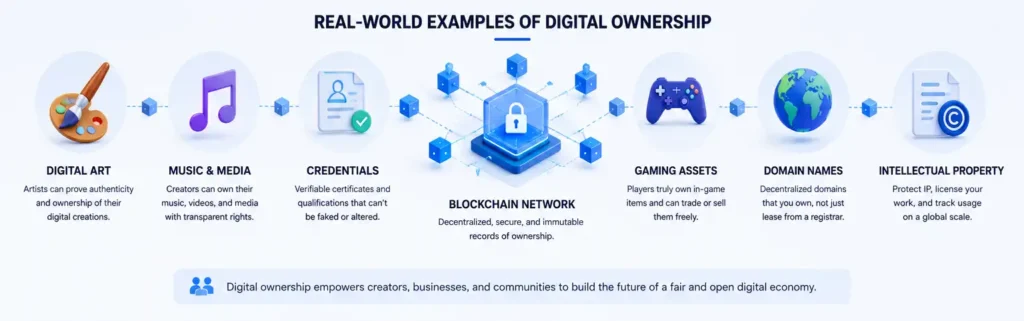
Digital Art
Artists can create verifiable ownership records for digital artwork, making it easier to establish authenticity and provenance.
Creator Content
Content creators may be able to prove ownership of original works and establish transparent licensing agreements.
Gaming Assets
Players could own in-game items that exist independently of a specific game publisher, allowing assets to be traded or transferred.
Digital Credentials
Educational certificates, professional qualifications, and identity credentials can be verified through blockchain-based systems.
Why Digital Ownership Matters for Creators
The creator economy continues to grow rapidly. Millions of people now earn income through content creation, digital products, courses, memberships, media, and intellectual property.
Digital ownership offers creators several potential benefits:
- Greater control over intellectual property
- New monetization opportunities
- Direct ownership of audience relationships
- Transparent licensing models
- Protection of digital assets
As AI-generated content becomes more common, proving originality and ownership may become increasingly valuable.
The Role of Web3
Web3 is often described as the next evolution of the internet, built around decentralized ownership and user control.
Rather than relying exclusively on centralized platforms, Web3 technologies aim to give users greater control over assets, identities, and data.
While Web3 is still evolving, digital ownership remains one of its most compelling use cases.
Digital Ownership in the Age of AI
The rise of artificial intelligence adds a new layer of complexity to ownership.
Questions surrounding AI-generated content, training data, digital identity, and intellectual property are becoming increasingly important. Blockchain technology may play a role in helping creators, businesses, and consumers verify authenticity and establish ownership records in an AI-driven world.
While many legal and technical questions remain unresolved, the intersection of AI and blockchain could become one of the defining developments of the future digital economy.
The Future of Digital Ownership
Digital ownership is still in its early stages, but its potential implications are enormous.
As more aspects of life, business, and creativity move online, ownership of digital assets will become increasingly important. Blockchain technology offers a framework for creating trust, transparency, and verifiable ownership in a world where value is becoming increasingly digital.
The organizations and individuals who understand digital ownership today may be better positioned to participate in tomorrow’s digital economy.
Final Thoughts
Blockchain is about far more than cryptocurrency. At its core, it represents a new way to establish trust, verify ownership, and transfer value in digital environments.
Whether through digital identities, creator rights, tokenized assets, or AI-generated content, digital ownership is likely to become one of the most important concepts shaping the future digital economy.

About the Author
Curtis Randall is an award-winning creative executive and future systems thinker helping people and businesses understand the future of work, technology, digital ownership, and creativity. Through CurtisRandall.com, and Sights.com, Curtis explores the systems shaping how people work, create, own, and build value in a rapidly changing world.
Connect with Curtis: LinkedIn · YouTube · Instagram · X · TikTok · Facebook · Threads
Explore the Future Digital Economy
Discover how AI, blockchain, cryptocurrency, Web3, digital ownership, and emerging technologies are reshaping business, work, and opportunity. Explore more insights on Sights.com and stay ahead of the future.
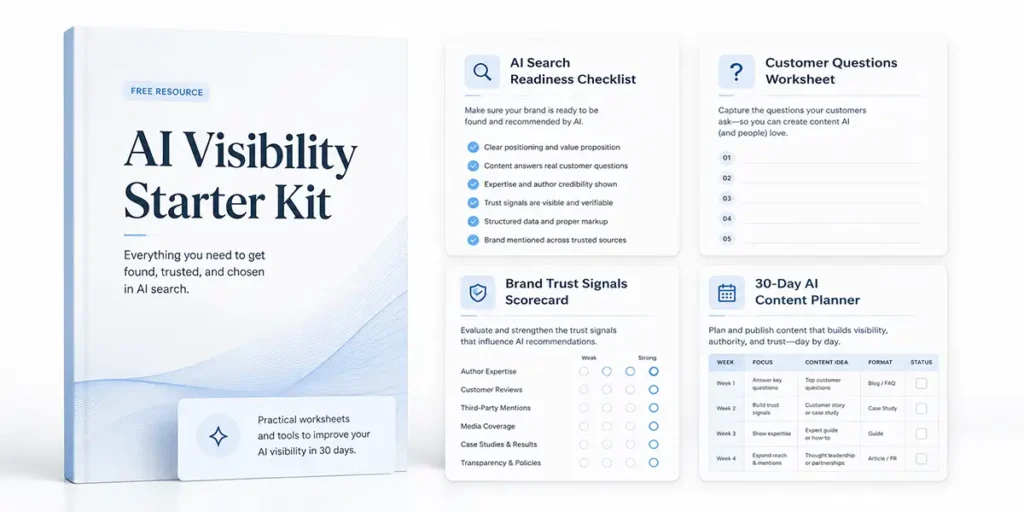
Want to Improve Your AI Visibility?
Download the free AI Visibility Starter Kit from Sights.com and start improving your content clarity, customer questions, trust signals, and AI search readiness.