
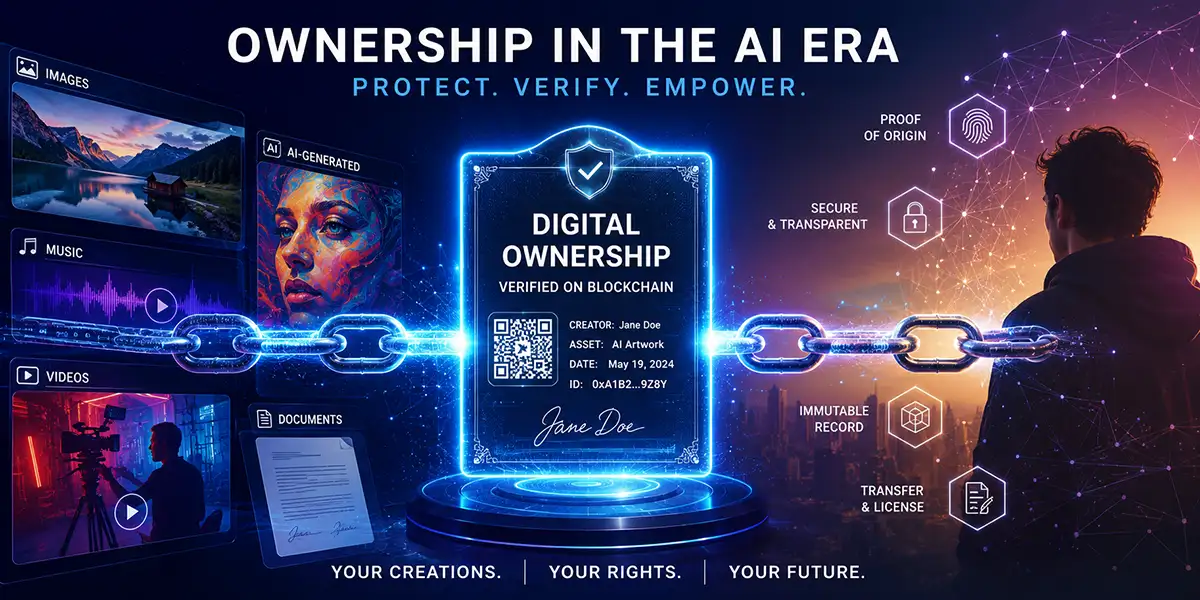
Blockchain and Digital Ownership: Why It Matters in the AI Era
Ownership is one of the foundations of modern society.
For centuries, ownership has been relatively straightforward. If you owned land, a house, a car, or a physical object, there were systems in place to prove it. Governments maintained records, businesses issued titles, and legal systems protected property rights.
But as more of our lives move online, ownership becomes far more complicated.
Digital files can be copied instantly. Images can be downloaded. Videos can be duplicated. AI systems can generate content in seconds. In a world where digital assets can be endlessly reproduced, proving ownership becomes increasingly difficult.
This is where blockchain technology enters the conversation.
While blockchain is often associated with cryptocurrency, one of its most important long-term applications may be helping individuals and businesses establish, verify, and manage digital ownership.
The Problem With Digital Ownership
The internet was built around sharing information. While this has created incredible opportunities, it has also created challenges when it comes to ownership.
Consider a few common examples:
- A photographer uploads an image online.
- A musician releases a song.
- A creator publishes a video.
- An author writes a digital book.
- A designer creates digital artwork.
In each case, the content can be copied, redistributed, modified, or republished within seconds.
Traditional copyright laws still apply, but proving ownership and tracking usage often remains difficult, especially across global digital networks.
How Blockchain Creates Proof of Ownership
At its core, blockchain functions as a secure and transparent record-keeping system.
Instead of storing ownership information in a single database controlled by one organization, blockchain distributes records across a network of computers. Once information is recorded, it becomes extremely difficult to alter without network consensus.
This creates a permanent digital ledger that can verify:
- Who created an asset.
- When it was created.
- Who currently owns it.
- How ownership has changed over time.
- Whether rights have been transferred or licensed.
Rather than relying solely on trust between parties, blockchain creates a verifiable ownership history that can be independently reviewed.
Why Digital Ownership Matters in the AI Era
The rise of artificial intelligence introduces new questions about ownership that society is only beginning to address.
For example:
- Who owns AI-generated content?
- Who owns AI-assisted work?
- How can creators prove originality?
- How can businesses verify the source of digital assets?
- How can intellectual property be protected online?
As AI systems become more capable of generating text, images, music, video, and software, establishing trusted records of ownership may become increasingly important.
Blockchain offers a potential solution by creating transparent records that can document creation, ownership, licensing, and transfer of digital assets.
Digital Assets Are Becoming Valuable Property
Many people still think of ownership primarily in physical terms.
However, digital assets are becoming increasingly valuable.
Examples include:
- Domain names.
- Digital artwork.
- Videos and films.
- Music catalogs.
- Educational courses.
- Software.
- Digital identities.
- Brand assets.
- AI-generated content.
In many cases, these assets can generate revenue for years while existing entirely in digital form.
The ability to prove ownership and manage rights becomes increasingly valuable as digital economies continue to grow.
Beyond NFTs: Understanding the Bigger Picture
When many people hear the term digital ownership, they immediately think of NFTs.
While NFTs helped introduce ownership concepts to a broader audience, they represent only one possible application of blockchain technology.
The larger opportunity involves creating trusted ownership systems for virtually any digital asset.
This could include:
- Business contracts.
- Creative works.
- Professional certifications.
- Intellectual property.
- Digital licenses.
- Identity credentials.
Blockchain provides a framework for recording and verifying ownership regardless of the asset type.
Why Businesses Should Pay Attention
Digital ownership is not just a creator issue.
Businesses increasingly rely on digital assets to generate value and maintain competitive advantages.
Blockchain-based ownership systems could help organizations:
- Protect intellectual property.
- Verify digital authenticity.
- Manage licensing agreements.
- Reduce fraud.
- Track asset transfers.
- Improve transparency.
As digital assets become more important, ownership verification may become a standard business requirement.
The Future of Ownership
The shift from physical economies to digital economies is still unfolding.
Just as land registries helped establish trust in physical property markets, blockchain-based ownership systems may help establish trust in digital markets.
Future ownership records could cover everything from creative works and business agreements to educational credentials and digital identities.
The technology is still evolving, but the direction is becoming increasingly clear. As AI expands the creation and distribution of digital content, proving ownership may become more important than ever.
Preparing for the Digital Ownership Economy
Whether you are a creator, entrepreneur, business owner, or investor, understanding digital ownership is becoming increasingly relevant.
Blockchain is not simply about cryptocurrency. It is about creating systems of trust for a digital world.
As AI continues to reshape how content is created and distributed, blockchain may become one of the key technologies that helps individuals and businesses prove ownership, protect value, and participate confidently in the next generation of digital commerce.
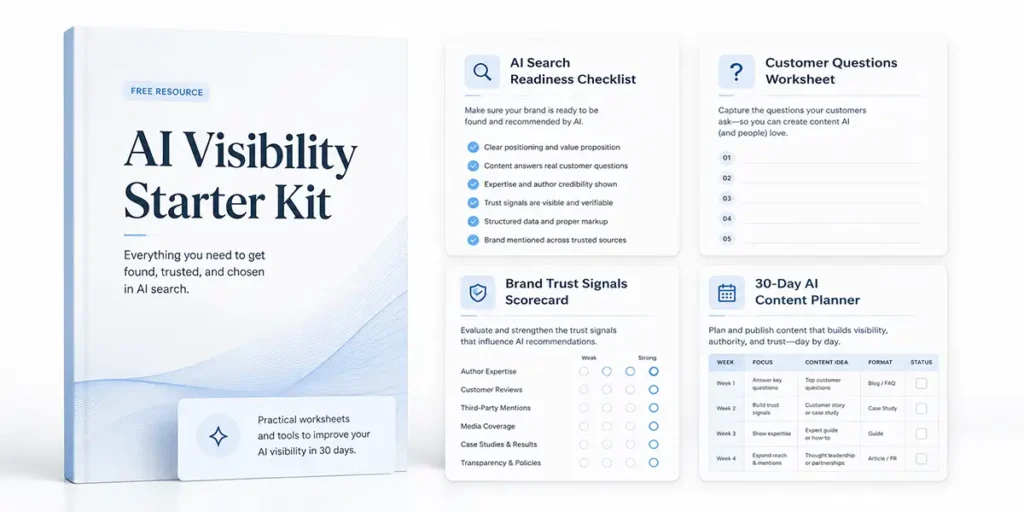
Want to Improve Your AI Visibility?
Download the free AI Visibility Starter Kit from Sights.com and start improving your content clarity, customer questions, trust signals, and AI search readiness.