
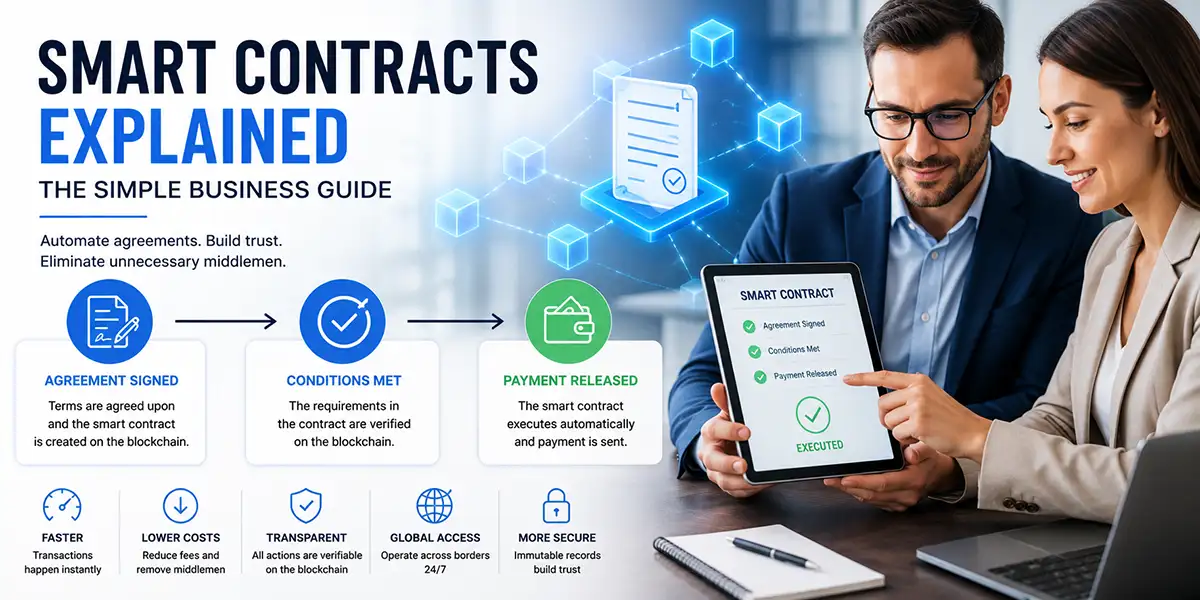
Smart Contracts Explained: The Simple Business Guide
Blockchain technology has introduced many new concepts into the business world, but few are as important—or as misunderstood—as smart contracts.
For many people, the term sounds highly technical. In reality, the idea behind smart contracts is surprisingly simple.
A smart contract is a digital agreement that automatically executes when specific conditions are met. Instead of relying on paperwork, manual approvals, or intermediaries, smart contracts use software running on a blockchain network to carry out agreed-upon actions.
While the technology is still evolving, smart contracts have the potential to transform how businesses manage payments, licensing, ownership transfers, and commercial agreements.
Understanding smart contracts today may help business owners, creators, and entrepreneurs prepare for a future where automation and digital trust play a much larger role in everyday transactions.
What Are Smart Contracts?
The simplest way to understand smart contracts is through a basic rule:
If this happens, then automatically do that.
For example:
- If a project is approved, release payment.
- If a customer pays, grant access to a service.
- If ownership transfers, update records automatically.
- If a rental agreement expires, revoke access rights.
Instead of waiting for people to process paperwork, verify payments, or manually complete tasks, the smart contract performs the action automatically according to rules agreed upon in advance.
Why Smart Contracts Were Invented
Traditional business agreements often require multiple parties to verify and enforce transactions.
Depending on the situation, this might involve:
- Lawyers.
- Banks.
- Escrow services.
- Administrators.
- Accounting departments.
- Third-party verification systems.
Each step introduces cost, delays, and potential human error.
Smart contracts were created to reduce these inefficiencies by allowing certain actions to occur automatically once predetermined conditions are satisfied.
Rather than replacing legal agreements entirely, smart contracts automate portions of the process that would otherwise require manual intervention.
How Smart Contracts Work
At a high level, smart contracts operate in four simple steps:
- Parties agree on the rules.
- The rules are programmed into a smart contract.
- The contract is deployed on a blockchain.
- Actions automatically execute when conditions are met.
Because the contract exists on a blockchain, participants can verify the agreement and review the transaction history without relying on a single centralized authority.
Real-World Examples of Smart Contracts
Freelancers and Consultants
A client deposits payment into a smart contract before work begins. Once the agreed milestone is approved, payment is automatically released to the freelancer.
Content Licensing and Royalties
Musicians, photographers, writers, and video creators can use smart contracts to distribute royalties automatically whenever their content is purchased or used.
Real Estate Transactions
Ownership records and payment verification could be managed through smart contracts, reducing paperwork and speeding up property transfers.
Insurance Claims
When verified events occur, smart contracts could automatically process and release insurance payments without requiring lengthy approval processes.
The Benefits of Smart Contracts
Businesses are increasingly interested in smart contracts because of the advantages they offer.
- Automation: Reduces repetitive administrative work.
- Speed: Transactions can occur instantly.
- Lower Costs: Fewer intermediaries are required.
- Transparency: Actions are visible and verifiable.
- Security: Blockchain records are difficult to alter.
- Global Access: Contracts can operate across borders.
For digital businesses operating internationally, these benefits can create significant efficiencies.
What Smart Contracts Cannot Do
While smart contracts are powerful, they are not magic solutions.
There are still important limitations to consider.
- Bad code can produce bad results.
- External information still requires trusted verification.
- Human judgment remains necessary in many situations.
- Legal frameworks continue to play an important role.
- Disputes may still require traditional resolution processes.
Smart contracts work best when handling clearly defined actions and measurable outcomes.
How Smart Contracts Could Change Business
Many experts believe smart contracts will become part of the digital infrastructure that powers future business operations.
They have the potential to become:
- The agreement layer of digital business.
- The payment layer for automated transactions.
- The ownership layer for digital assets.
- The trust layer for decentralized commerce.
As blockchain adoption increases, smart contracts could help businesses automate many of the processes that currently consume time and resources.
Why Business Owners Should Pay Attention
You do not need to be a blockchain developer to understand why smart contracts matter.
The larger trend is the movement toward automated trust systems.
Businesses are constantly searching for ways to reduce friction, lower costs, improve transparency, and accelerate transactions. Smart contracts offer a framework for accomplishing all four.
While widespread adoption may still take time, the direction is becoming increasingly clear. The future of business agreements will likely involve a combination of traditional legal systems and blockchain-based automation.
For entrepreneurs, creators, and business leaders, understanding smart contracts today may provide a valuable advantage as digital commerce continues to evolve.
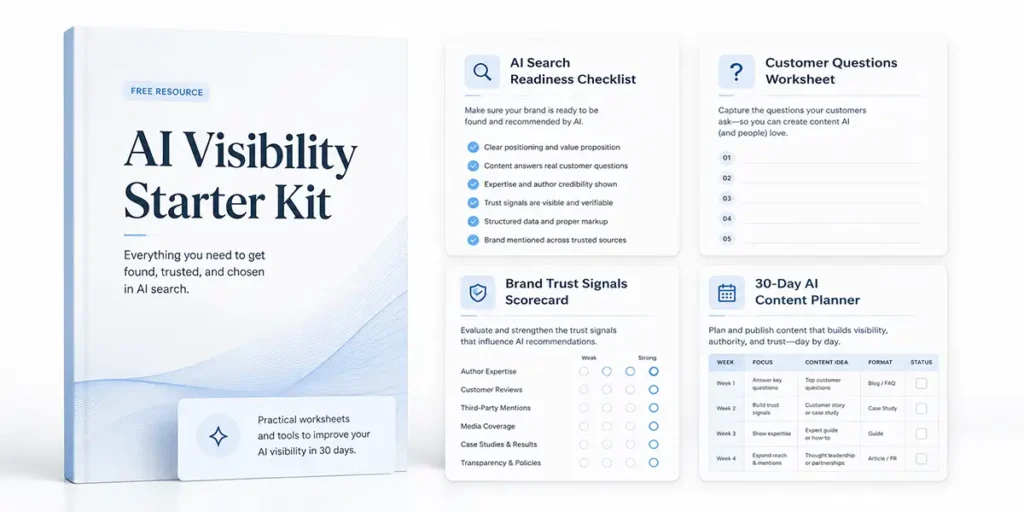
Want to Improve Your AI Visibility?
Download the free AI Visibility Starter Kit from Sights.com and start improving your content clarity, customer questions, trust signals, and AI search readiness.